français
 Deutsch
 русский
 italiano
 español
 português
 Nederlands
 العربية
 日本語
日本語 한국의
한국의 Türkçe
 Polski
 Tiếng Việt
 slovenský
 Indonesia



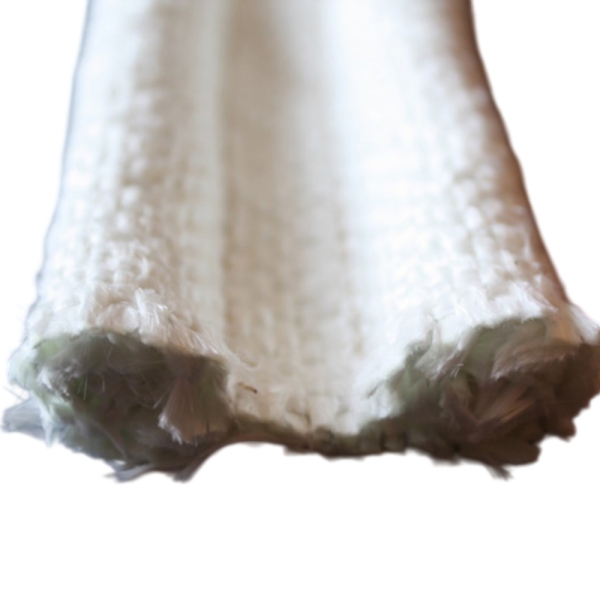
A double bulb tadpole gasket tape has two compressible sealing bulbs connected by a flat textile web. The two bulbs provide separate contact positions within one profile, while the connecting section establishes their spacing and can provide a mounting area where the equipment design allows.
This construction is worth considering when an industrial door or panel requires two defined sealing tracks. It is not simply a thicker version of a standard tadpole seal, and adding a second bulb does not automatically improve every joint. Both bulbs need suitable contact surfaces, the correct installed height and sufficient closing load.
For OEM and replacement projects, start with the joint cross-section. Once the contact positions are established, the cover fabric, internal cores and fastening details can be selected around the actual installation.
Double Bulb, Single Bulb and Double Tail: Read the Cross-Section
The words “double bulb” describe the number of sealing bulbs, not the number of fabric layers or mounting tails. This distinction should be visible on the drawing before dimensions or materials are discussed.
| Profile | Cross-Section | What the Drawing Must Establish |
|---|---|---|
| Single bulb tadpole gasket | One sealing bulb with an extended mounting tail. | The bulb contact position and the tail retention area. |
| Double bulb tadpole gasket | Two sealing bulbs connected by a flat web. | Both contact positions, bulb spacing and the intended retention arrangement. |
| Double tail tadpole gasket | One sealing bulb with mounting tails extending on both sides. | How the two tails are retained around the single sealing bulb. |
A double tail profile does not provide a second bulb. Likewise, two layers of fabric around one core still form a single-bulb gasket. Specify the shape with a cross-sectional sketch rather than relying on the product name alone.
When Does a Two-Bulb Profile Make Sense?
The clearest starting point is an existing equipment drawing that already specifies two bulbs. A replacement should preserve the required contact locations and mounting geometry unless an engineering review supports a change.
For a new design, a double bulb tadpole seal may be considered when the frame provides two supported sealing tracks and the designer wants their relative positions defined by one connected profile. The connecting web establishes a relationship between the bulbs, but the retaining system must still prevent the assembly from shifting.
Check the available width as well as the closed gap. A second bulb positioned beyond the mating surface cannot contribute the intended contact. Similarly, a bulb resting on an unsupported edge may deform differently from one seated against a continuous surface.
A second bulb is not a substitute for correcting a distorted frame, unsuitable latch or damaged sealing surface. Address those conditions before selecting a larger or more complex gasket.
The Drawing Needs More Than Two Bulb Diameters
A double-bulb specification should show the uncompressed profile and its relationship to the closed joint. The following dimensions provide a practical starting point.
| Drawing Detail | What to Specify | Why It Matters |
|---|---|---|
| Bulb dimensions | Free height and width of each bulb, or diameter where the section is round. | Defines each compressible section without assuming the two bulbs are identical. |
| Bulb spacing | Center-to-center distance with clearly marked measurement points. | Locates the two contact tracks on the equipment. |
| Connecting web | Clear width between the bulbs, thickness and any fastening details. | Defines the connecting section and its fit beneath the retaining hardware. |
| Installed gaps | The closed gap at each bulb position, including variation around the perimeter. | Shows how much each bulb must deform in service. |
| Overall envelope | Total profile width and clearance around adjacent components. | Checks that the complete gasket fits without interference. |
| Finished geometry | Length, corners, bend radii, joints and the reference path used for measurement. | Defines the installed perimeter rather than only a straight sample. |
Center-to-center spacing is not the same as clear web width. Mark both when mounting space is restricted. For a worn replacement sample, also measure the equipment: permanent compression can obscure the original bulb height.
Check Compression at Both Contact Positions
A flat-looking door can still present different gaps at the two bulb locations. One bulb may contact the frame before the other. If the first bulb becomes heavily compressed before the second establishes contact, changing the material alone may not resolve the problem.
Evaluate the two locations separately, then assess the assembly together. Record the free bulb heights, installed heights and available closing load. Where the bulbs have different dimensions or cores, specify those differences explicitly.
The door must supply the load needed to compress all engaged sealing sections. Do not assume that a double bulb profile will close as easily as the previous single-bulb gasket, or that its required load will be exactly twice as high. The result depends on the complete profile and installation geometry.
For a new design, a trial assembly is more useful than judging compression by squeezing a short loose sample. Use the intended retaining arrangement and check contact around corners as well as along straight sections.
Material and Core Options for Custom Development
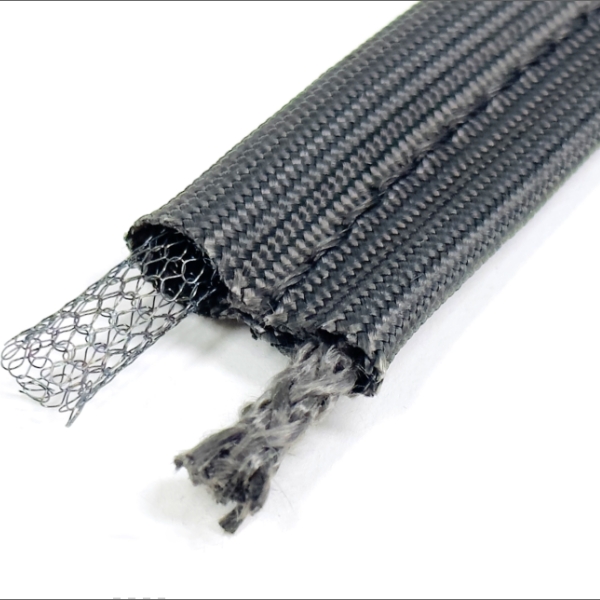
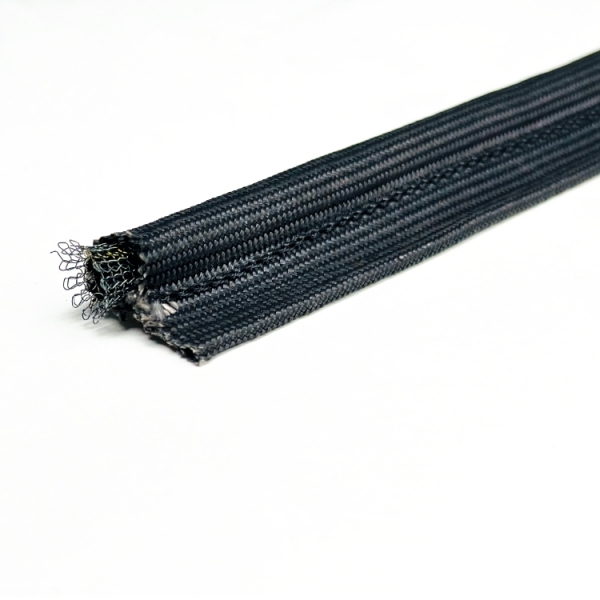
The double-bulb shape does not prescribe one material. A fiberglass double bulb tadpole gasket uses a fiberglass textile cover, but the internal construction still needs to be defined. Fiber cores, reinforced mesh cores and hollow metallic cores offer different design starting points.
The following BSTFLEX products provide existing material-and-core references. They are not presented as standard double-bulb versions; the finished two-bulb profile must be specified separately.
| Existing Construction Reference | Material Combination | Question for a Double-Bulb Design |
|---|---|---|
| Fiberglass cover with fiberglass core | Woven fiberglass exterior with a fiber-based internal bulb. | Does the selected core provide the required compression and recovery at both contact positions? |
| Fiberglass cover with stainless steel core | Fiberglass exterior with internal metallic support. | Which core construction and alloy match the required load, movement and environment? |
| Fiberglass cover with hollow stainless steel core | Fiberglass exterior over an open-center metallic structure. | Is the available compression travel compatible with the closed gaps and retaining arrangement? |
| Silica cloth cover with Inconel core | Silica textile combined with metallic internal reinforcement. | Are the selected cover, alloy and assembly suitable for the actual thermal exposure? |
| Ceramic fabric cover with ceramic core | Ceramic textile cover with a ceramic-based internal core. | How does the proposed construction behave after the required compression and thermal cycles? |
Core density, wire construction and cover tension can change the compression response. Material names alone do not establish which finished gasket is softer or more durable. Compare the proposed assemblies against the same equipment requirements.
Temperature must also be specified for the complete gasket. The cover, core, stitching and any coating or attachment material all require review. Two bulbs do not double the temperature rating, and a more heat-resistant core does not remove the limitations of the outer cover.
Industrial Applications: Match the Profile to the Joint
Industrial Oven Doors
On a batch, curing or drying oven, consider a double bulb profile when the door design provides two suitable contact tracks. Review the latch capacity, hinge-side movement and retaining space before selecting the bulb dimensions. The aim is controlled contact at both tracks, not simply more gasket material around the opening.
Furnace Access Doors and Heated Panels
For furnace access openings, identify the temperature and exposure at the seal location rather than assigning the chamber temperature to every gasket component. Where the drawing calls for two bulbs, cover and core selection should be reviewed together with the frame geometry and opening frequency.
Duct Access Covers and Thermal Enclosures
For removable covers, establish the available clamping load and check whether both sealing tracks are supported. Also define any pressure differential and allowable leakage. A two-bulb textile gasket is not automatically gas-tight, a pressure-vessel gasket or an independently monitored double-seal system.
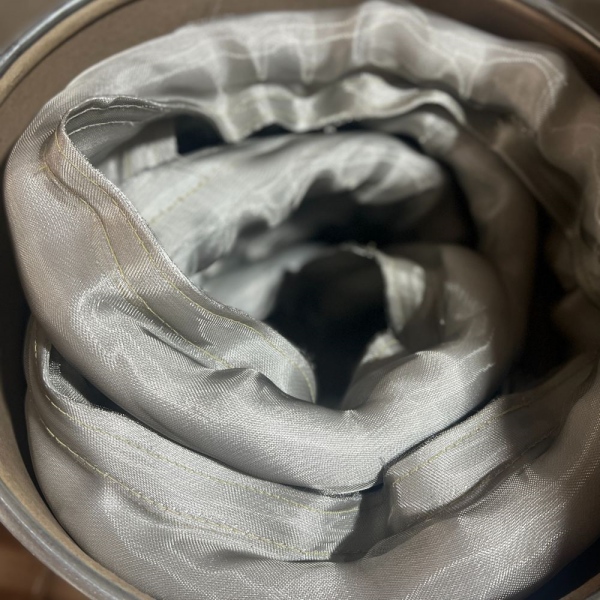
Corners and Retention Need Their Own Details
Two parallel bulb paths follow different inside and outside lengths around a corner. A profile that fits a straight test section may bunch, stretch or change spacing when formed around the complete door.
Include corner radii and joining locations on the drawing. Where a fabricated frame is proposed, define how the bulbs and connecting web continue through each corner. Do not leave the corner construction to an installation assumption.
Retaining hardware should secure the designated mounting area without unintentionally crushing a bulb or obstructing its movement. Check for sharp edges and sliding contact that could damage the textile during repeated opening.
After trial installation, inspect both contact tracks and the connecting web. A visibly flattened bulb does not prove that the complete perimeter meets the required sealing performance.
Ordering a Custom Double Bulb Tadpole Gasket
BSTFLEX supports drawing-based and sample-based gasket development through its custom tadpole gasket manufacturing service. For a double-bulb project, send the cross-section and mating joint together so the profile can be reviewed in its installed position.
For quotation: include both bulb dimensions, center spacing, web width and thickness, overall length, corner details, mounting method and quantity. Add continuous temperature, peak temperature and duration, process exposure, closed gaps and available closing-load information.
For sample approval: agree the dimensional tolerances, fit checks, compression requirements and representative operating tests before production. Where the original materials are unknown, identify them as unknown rather than substituting an assumed specification.
Questions About Double Bulb Tadpole Gasket Tape
Is a double bulb tadpole gasket the same as a double tail gasket?
No. A double bulb profile has two sealing bulbs. A double tail profile has one bulb with mounting tails on both sides. The distinction should be shown on the cross-sectional drawing.
Can a double bulb gasket replace a single bulb gasket?
Only after checking the joint. The additional bulb needs a supported mating surface, sufficient space and a compatible closing load. It is not automatically a direct replacement.
Does “gasket tape” mean the product is self-adhesive?
No. The name does not establish an adhesive backing. Specify the fastening method separately. Any adhesive used for positioning must be evaluated for its exposure and intended role.
Does a second bulb guarantee lower leakage?
No. Both bulbs must establish the intended contact, and the cover, joints, corners and retention must suit the application. Verify performance against the agreed equipment test rather than bulb count alone.
Discuss Your Double-Bulb Profile with BSTFLEX
Explore the BSTFLEX tadpole gasket and tadpole seal range for material options, then submit the proposed two-bulb geometry for review.
Request a custom double bulb tadpole gasket quotation. Send a cross-sectional drawing, equipment gap measurements, operating conditions and required quantity to begin the specification review.