français
 Deutsch
 русский
 italiano
 español
 português
 Nederlands
 العربية
 日本語
 한국의
 Türkçe
 Polski
 Tiếng Việt
 slovenský
 Indonesia



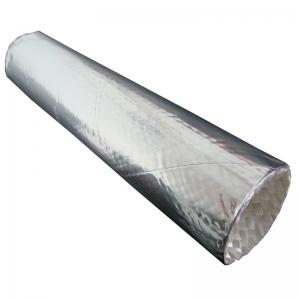
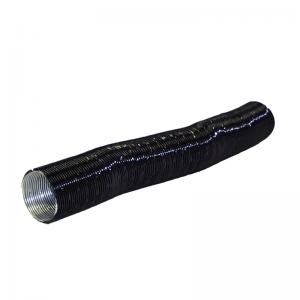
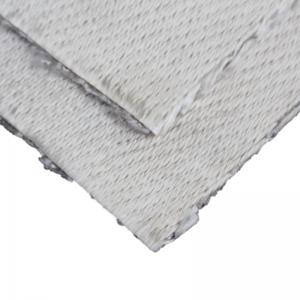
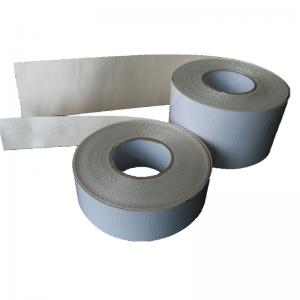
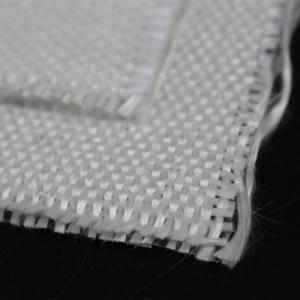
A double tail tadpole gasket has one compressible sealing bulb positioned between two flat mounting tails. The bulb forms the sealing contact, while the tails extend from both sides of the bulb and provide two areas for mechanical retention.
This profile is different from a double bulb gasket. A double tail construction has one sealing bulb and two mounting flanges. A double bulb construction has two compressible bulbs connected by a textile section.
The double tail arrangement can be useful when an equipment designer wants the bulb centered between two retaining surfaces, requires fastening on both sides of the sealing line, or needs the mounting load distributed across a wider area.
BSTFLEX manufactures custom tadpole gaskets and high temperature tadpole seals using different cover fabrics, internal cores, bulb dimensions and mounting-tail configurations for industrial ovens, furnaces, kilns, access panels and OEM thermal equipment.
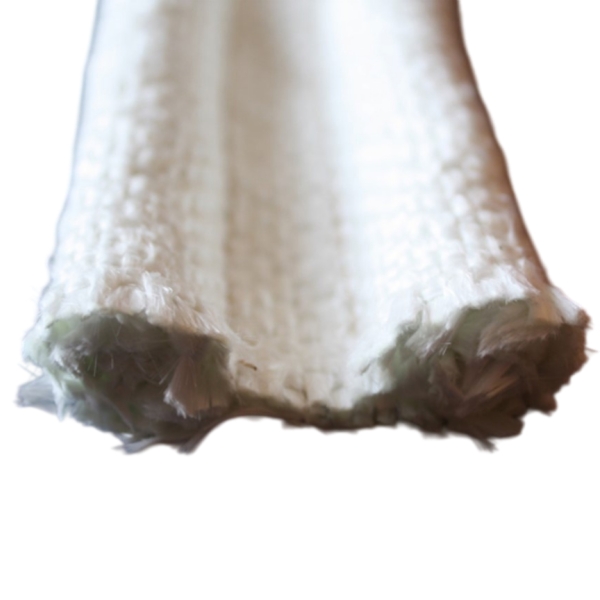
What Is a Double Tail Tadpole Gasket?
A standard single-tail tadpole gasket normally has one bulb and one flat tail extending from one side of the profile.
A double tail profile places the bulb between two mounting sections:
| Profile Section | Primary Function |
|---|---|
| Central Bulb | Compresses against the mating surface and forms the primary sealing zone. |
| First Tail | Provides a mounting area on one side of the bulb. |
| Second Tail | Provides an additional mounting area on the opposite side. |
| Outer Cover | Encloses the core and forms the exposed textile surface. |
| Internal Core | Controls bulb support, compression and recovery. |
The two tails may be equal in width, or they can be manufactured with different dimensions when the mounting arrangement is asymmetric.
Double Tail Is Not the Same as Double Bulb
| Feature | Double Tail Tadpole Gasket | Double Bulb Tadpole Gasket |
|---|---|---|
| Number of Sealing Bulbs | One | Two |
| Number of Mounting Tails | Two | Depends on the design |
| Main Purpose | Provides mounting surfaces on both sides of one bulb | Provides two separate sealing contact positions |
| Critical Dimension | Left-tail width, right-tail width and bulb location | Bulb spacing and two installed sealing gaps |
| Typical Drawing Question | How are both tails retained? | Where do both bulbs contact the equipment? |
For two-bulb profile selection, review the Double Bulb Tadpole Gasket Tape Design Guide .
Why Use Two Mounting Tails?
A second tail should serve a defined mounting or design purpose. It should not be added only to make the gasket appear wider or heavier.
A double tail construction may be considered when:
- The bulb must remain centered between two retaining plates
- The equipment uses fasteners on both sides of the sealing line
- The mounting load needs to be distributed across both sides
- The design requires a symmetrical gasket profile
- One tail alone cannot provide sufficient mounting area
- The gasket is installed between two structural surfaces
- The profile must resist rolling or lateral movement
- The OEM drawing already specifies two mounting flanges
Two tails do not automatically produce a better seal. The primary sealing action still takes place in the bulb. The tails position and retain the gasket but should not prevent the bulb from compressing correctly.
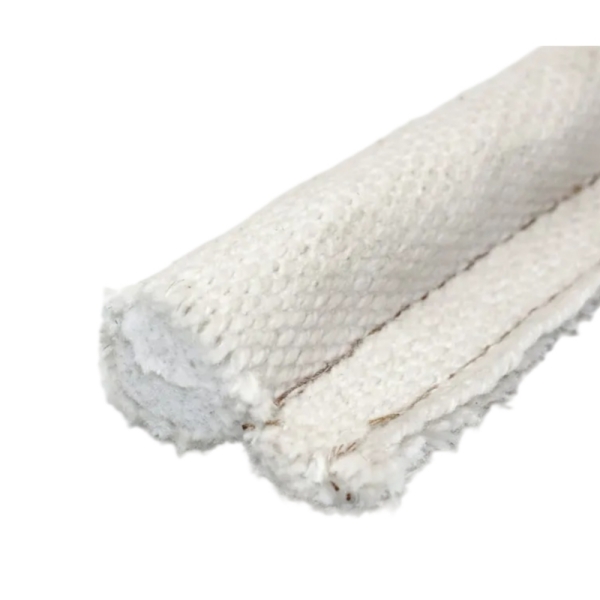
Common Double Tail Mounting Arrangements
Two-Sided Retaining Plates
Each tail can be positioned beneath a separate retaining plate. This arrangement can help keep the bulb centered and reduce lateral movement.
The drawing should define:
- Retaining-plate width
- Distance between the retaining plates
- Fastener spacing
- Tail engagement beneath each plate
- Clearance between the plates and bulb
- Plate-edge finish
The plate edges should not cut into the cover or restrict the bulb’s normal movement.
Single Wide Retaining Plate
A single plate can sometimes span both tails while leaving the bulb exposed through a central opening or shaped clearance.
This configuration requires careful dimensional control. The retaining plate must secure the tails without pressing directly on the bulb unless the equipment is specifically designed for that contact.
Bolts, Screws or Rivets Through Both Tails
The two tails may be fastened directly to the supporting structure.
Where holes are required, specify:
- Hole diameter
- Hole spacing
- Distance from the bulb
- Distance from the tail edge
- Whether holes are supplied by BSTFLEX or made during installation
- Whether eyelets or other reinforcement are required
Fasteners placed too close to the bulb can interfere with compression or damage the core.
Channel or Slot Mounting
One or both tails may slide into a formed channel or slot.
For channel mounting, provide:
- Channel width
- Channel depth
- Entry clearance
- Tail thickness
- Required insertion length
- Method used to prevent the gasket from moving out of the channel
Specify Both Tail Widths Separately
A double tail gasket should not be specified only by one general “tail width.”
The cross-sectional drawing should show:
- Left-tail width
- Right-tail width
- Left-tail thickness
- Right-tail thickness
- Bulb height
- Bulb width
- Overall profile width
- Stitch locations
- Bulb centerline
- Closing direction
Even when both tails are intended to be equal, dimension them independently on the approved drawing.
| Dimension | Recommended Definition |
|---|---|
| Bulb Height | Free outside height measured in the intended compression direction |
| Bulb Width | Free outside width across the bulb |
| Left-Tail Width | Distance from the defined bulb reference to the left outer tail edge |
| Right-Tail Width | Distance from the defined bulb reference to the right outer tail edge |
| Overall Width | Total outside width of the complete cross-section |
| Tail Thickness | Finished textile thickness within each mounting area |
| Bulb Centerline | Reference line through the center of the sealing bulb |
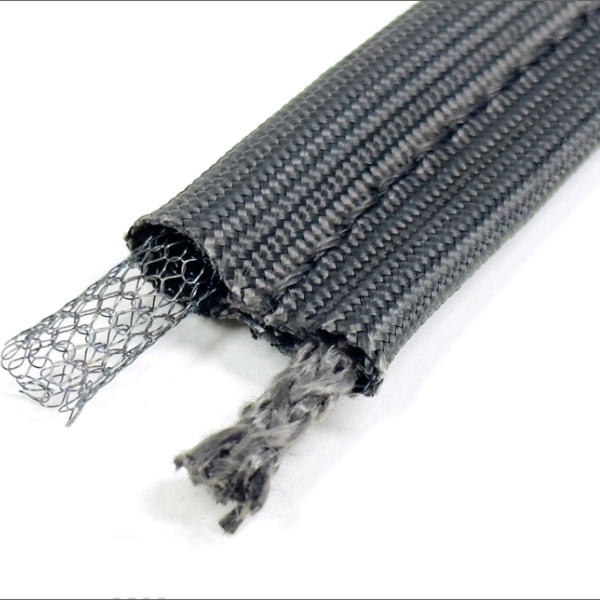
Symmetrical vs Asymmetrical Double Tail Profiles
Symmetrical Double Tail
A symmetrical profile has two tails of equal or nominally equal dimensions.
This construction can simplify orientation where both sides use the same retaining arrangement. The drawing should still identify the hot side and installation direction if the cover, coating or stitching is not symmetrical.
Asymmetrical Double Tail
An asymmetrical profile has tails with different widths, thicknesses or mounting functions.
For example:
- One tail may sit beneath a wide retaining strip
- The other tail may fit into a narrow channel
- One tail may contain fastener holes
- The opposite tail may act primarily as a stabilizing flange
- One side may require greater clearance from the bulb
For an asymmetrical design, clearly mark left/right, inside/outside or hot-side/cold-side orientation.
Bulb Position Is a Critical OEM Dimension
The gasket can have the correct overall width and still fail to align with the intended sealing track.
The drawing should locate the bulb relative to:
- The retaining plates
- The fastener centerline
- The equipment opening
- The door contact surface
- The hot-side edge
- The cold-side edge
- The mounting datum
For replacement work, measure the equipment contact line rather than assuming that the old bulb remains in its original position.
Do Not Clamp the Bulb with the Mounting Tails
The retaining system should secure the tails while leaving the bulb free to perform its sealing function.
Common installation problems include:
- Retaining plates pressing against the bulb
- Fasteners passing through the core
- Tail material folding under the bulb
- Plate edges cutting the fabric cover
- Insufficient clearance for bulb compression
- Tails pulling the bulb away from the contact line
- Unequal mounting load twisting the profile
A prototype installation should confirm that tightening the fasteners does not change the intended bulb position or preload the bulb before the door closes.
Cover Materials for Double Tail Tadpole Gaskets
The double tail geometry can be manufactured using different textile covers. Material selection should be based on the temperature and exposure at the gasket location rather than the equipment name alone.
Fiberglass Cover
Fiberglass can be considered for industrial oven doors, access panels and other thermal equipment where the verified operating conditions are suitable for the complete fiberglass construction.
Existing BSTFLEX fiberglass constructions include:
- Fiberglass Cover Fiberglass Core Tadpole Gasket
- Fiberglass Cover Stainless Steel Core Tadpole Gasket
- Fiberglass Cover Stainless Steel Hollow Core Tadpole Gasket
These pages provide cover-and-core references. The two-tail profile still requires a separate custom drawing.
Silica Cloth Cover
Silica cloth can be evaluated when the application requires a higher-temperature textile construction.
For metallic internal reinforcement, review the Silica Cloth Cover Inconel Core Tadpole Gasket .
Ceramic Fabric Cover
Ceramic fabric can be considered for demanding furnace, kiln and heat-treatment applications.
For a non-metallic ceramic core reference, review the Ceramic Fabric Cover Ceramic Core Tadpole Gasket .
Coated Textile Covers
Silicone-coated, PTFE-coated, vermiculite-treated or aluminized constructions may be evaluated where the application requires specific surface characteristics.
The coating should not be selected independently from temperature, flexibility, chemical exposure and mounting requirements.
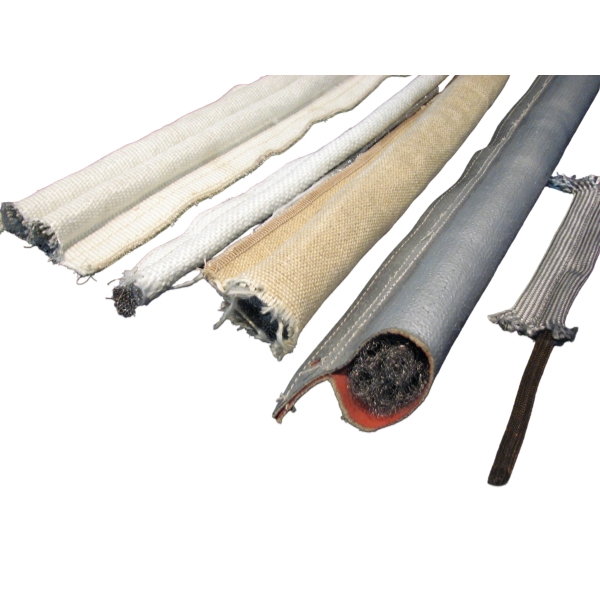
Core Options for a Double Tail Profile
The number of tails does not determine the core type.
Available internal constructions can include:
- Fiberglass fiber core
- Fiberglass rope core
- Silica rope core
- Ceramic fiber core
- Stainless steel mesh core
- Stainless steel hollow core
- Inconel mesh core
- Application-specific reinforced cores
A rope-core profile may provide a fiber-based internal structure, while a metallic mesh core provides a different combination of reinforcement and compression behavior.
For rope-core terminology and size selection, review the Tadpole Gasket Rope Selection Guide .
Double Tail Gasket Compression
The two tails do not create the primary compression seal. Compression is controlled mainly by the bulb and internal core.
If free bulb height and installed height are known, nominal dimensional compression can be calculated as:
Compression (%) = (Free Bulb Height - Installed Bulb Height) / Free Bulb Height × 100
This calculation does not determine the closing force or confirm that a particular compression percentage is suitable.
Evaluate:
- Core material
- Core density
- Bulb size
- Installed gap
- Closing force
- Recovery after opening
- Thermal cycling
- Gap variation around the equipment
Industrial Oven Door Applications
A double tail oven door gasket can be considered where the door or frame provides mounting surfaces on both sides of the sealing track.
Potential applications include:
- Batch oven doors
- Powder coating oven access panels
- Walk-in oven doors
- Drying oven covers
- Curing oven doors
- Conveyor oven inspection panels
- Heat-treatment oven access openings
For broader material and replacement selection, review the Industrial Oven Door Tadpole Gasket Guide .
Furnace and Kiln Door Applications
For furnace and kiln doors, the cover and core must be selected according to the temperature and mechanical exposure at the actual sealing line.
Double tails may assist retention, but they do not increase the temperature capability of the fabric or core.
Check for:
- Hot-gas leakage
- Radiant heat
- Refractory-edge contact
- Door-frame expansion
- Mechanical rubbing
- Retaining-plate temperature
- Fastener expansion
Review the Furnace Door Tadpole Gasket Selection Guide for high-temperature cover-and-core considerations.
Duct, Damper and Access-Panel Applications
Double tail profiles can also be considered for ducts, dampers and removable access panels where the equipment has mounting surfaces on both sides of a central sealing track.
For these applications, define:
- Pressure differential
- Process gas composition
- Vibration
- Panel movement
- Opening frequency
- Allowable leakage
- Mounting method
A textile tadpole gasket should not be described as gas-tight or pressure-rated without appropriate equipment-level validation.
Double Tail Endless Picture Frame Gaskets
A double tail profile can also be fabricated into a rectangular, square, round or custom closed-frame assembly.
For a formed frame, the drawing must define:
- Frame dimension datum
- Bulb orientation
- Left- and right-tail orientation
- Corner radii
- Joint location
- Profile twist control
- Retaining arrangement on all sides
Review the Endless Picture Frame Tadpole Gasket Guide for frame, corner and joint specifications.
Replacement Double Tail Tadpole Gaskets
An old double tail gasket may be stretched, compressed or torn. Do not reproduce its worn dimensions without also measuring the equipment.
Record:
- Bulb free height where it can be established
- Bulb width
- Left-tail width
- Right-tail width
- Overall profile width
- Tail thicknesses
- Core construction
- Cover material
- Closed equipment gap
- Retaining-plate positions
- Fastener spacing
- Total gasket route
Use the Tadpole Gasket Replacement Measurement Guide to document the old sample and equipment dimensions.
OEM Development Process
BSTFLEX supports drawing-based custom development through its Custom Tadpole Gasket Manufacturing service.
A typical double tail development process includes:
- Application and temperature review
- Equipment cross-section review
- Bulb position confirmation
- Left- and right-tail dimension confirmation
- Mounting and retaining-system review
- Cover and core selection
- Prototype manufacturing
- Customer fit and compression evaluation
- Drawing or sample approval
- Production supply
Prototype Inspection Checklist
| Inspection Item | Acceptance Question |
|---|---|
| Bulb Dimensions | Do the free bulb height and width match the approved drawing? |
| Bulb Position | Is the bulb correctly centered or offset relative to the tails? |
| Left Tail | Does the left tail fit the intended retaining area? |
| Right Tail | Does the right tail fit the intended retaining area? |
| Overall Width | Does the complete profile fit without interference? |
| Orientation | Are the hot side, cold side and mounting direction correct? |
| Fastener Clearance | Do holes, plates and fasteners avoid the bulb and stitch lines? |
| Compression | Does the door close while maintaining useful bulb contact? |
| Profile Stability | Does the gasket remain centered without rolling or twisting? |
| Thermal Evaluation | Does the complete construction remain suitable after representative exposure? |
RFQ Checklist for a Double Tail Tadpole Gasket
| RFQ Item | Information Required |
|---|---|
| Equipment | Industrial oven, furnace, kiln, duct, damper, panel or other application |
| Bulb | Height, width, shape and position |
| Left Tail | Width, thickness and retention method |
| Right Tail | Width, thickness and retention method |
| Overall Width | Total cross-sectional width |
| Cover | Fiberglass, silica, ceramic, coated textile or unknown |
| Core | Fiber, rope, ceramic, stainless steel, hollow mesh, Inconel or unknown |
| Mounting | Retaining plates, bolts, screws, rivets, clips, slots or channels |
| Installed Gap | Minimum and maximum closed gap at the bulb contact line |
| Temperature | Continuous and peak temperature at the gasket location |
| Length | Cut length, frame dimensions or complete sealing route |
| Quantity | Prototype quantity and expected production volume |
| Reference | Cross-sectional drawing, equipment drawing, photographs or physical sample |
Frequently Asked Questions
What is a double tail tadpole gasket?
It is a bulb-and-tail gasket with one compressible sealing bulb and two flat mounting tails extending from opposite sides of the bulb.
Is a double tail gasket the same as a double bulb gasket?
No. A double tail gasket has one bulb and two mounting tails. A double bulb gasket has two sealing bulbs.
Do both tails have to be the same width?
No. The tails can be equal or manufactured with different dimensions according to the mounting arrangement. Both widths should be shown separately on the drawing.
Can both tails contain mounting holes?
Yes, when the equipment design requires holes. Hole diameter, spacing, edge distance and relationship to the bulb must be defined before production.
Can a double tail gasket be manufactured as an endless frame?
Yes. A double tail profile can be fabricated into a rectangular, round or custom closed frame, subject to material, corner, joint and geometry review.
Can BSTFLEX reproduce an existing double tail gasket?
Yes. Development can begin from a cross-sectional drawing, physical sample and equipment measurements. A worn gasket should be supplemented with actual gap and mounting dimensions.
Which core is best for a double tail gasket?
There is no universal best core. Fiberglass, rope, ceramic, stainless steel, hollow mesh and Inconel constructions provide different compression and reinforcement characteristics. Selection depends on the actual application.
Request a Custom Double Tail Tadpole Gasket
BSTFLEX manufactures double tail tadpole gaskets, two-tail tadpole seals and custom center-bulb gasket profiles for OEM and industrial replacement projects.
Send the cross-sectional drawing showing the bulb, both tails, overall width and mounting arrangement. Include the operating temperature, closed gap, required length, quantity and available sample information.
For asymmetric profiles, identify the hot side, cold side, left tail, right tail and installation direction clearly on the drawing.
Contact BSTFLEX for a custom double tail tadpole gasket quotation.