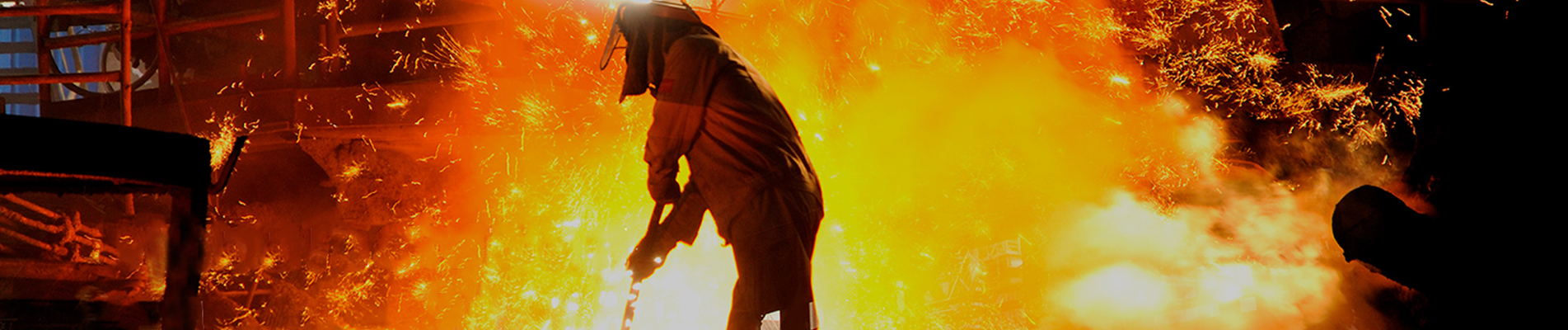
For this reason, furnace gasket selection should be based on the complete sealing assembly: cover material, internal core, bulb dimensions, mounting tail, stitching, compression range and actual temperature at the seal location.
BSTFLEX manufactures high temperature tadpole gaskets and tadpole seals for furnace doors, heat-treatment equipment, kilns, thermal chambers and other industrial heating systems. Profiles can be developed from drawings, equipment dimensions or existing gasket samples.
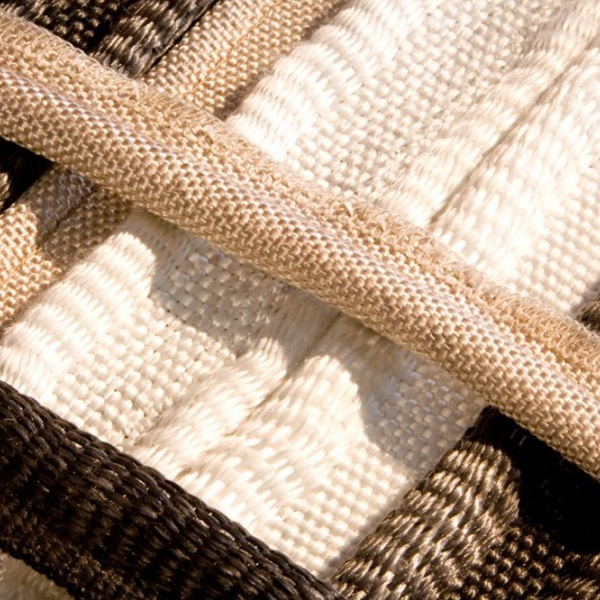
One of the most common specification mistakes is selecting the gasket only from the furnace setpoint.
The seal may be installed behind a refractory edge, outside the hottest chamber zone or adjacent to a cooled metal frame. In other equipment, the gasket may be exposed to direct radiation, hot gas leakage or heated metal surfaces.
Before selecting the material, determine:
The temperature capability of one raw fabric should not be treated as the temperature rating of the complete finished gasket.
A tadpole gasket uses a compressible bulb as the primary sealing section and a flat textile tail for mounting.
When the furnace door closes, the bulb is compressed between the door and mating frame. The internal core controls much of the bulb's resistance to compression and its ability to recover after the door opens.
The mounting tail is normally retained outside the main compression zone using a clamping strip, screws, bolts, rivets or another equipment-specific fastening system.
| Component | Main Function | Selection Question |
|---|---|---|
| Cover | Forms the exposed textile surface | What thermal and mechanical exposure will the gasket see? |
| Core | Controls bulb support and compression behavior | How much closing force, recovery and reinforcement are required? |
| Bulb | Creates the compression sealing zone | What free size and installed height match the furnace gap? |
| Tail | Provides the attachment area | How will the gasket be retained without interfering with the bulb? |
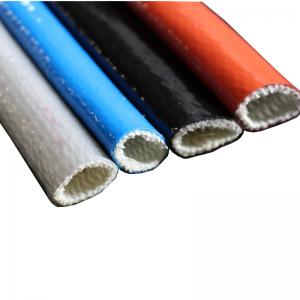
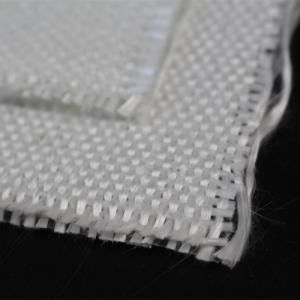
Fiberglass tadpole gaskets can be suitable for furnace and heating-equipment applications where the actual seal-line temperature falls within the capability of the complete fiberglass construction.
Standard fiberglass should not automatically be specified simply because the existing seal appears white or woven. Where temperatures are more demanding, silica or ceramic textiles may provide a more appropriate starting point.
A treated fiberglass surface can be considered where the application requires different surface and thermal characteristics from untreated fiberglass.
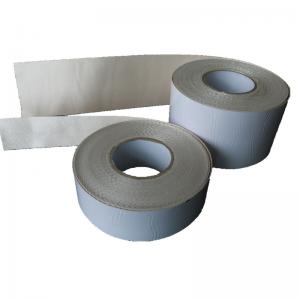
BSTFLEX manufactures Vermiculite Coated Fiberglass Tadpole Gasket Tape for industrial thermal sealing applications.
The final continuous-temperature requirement should always be checked against the actual material construction and verified product specification.
Silica cloth becomes an important option when the required thermal performance exceeds the practical operating range of a standard fiberglass construction.
The cover can be paired with either a non-metallic high-temperature core or a metallic reinforced core.
For a silica cover with metallic support, review the High Temperature Tadpole Gasket with Silica Cloth Cover and Inconel Core .
Where a non-metallic internal construction is preferred, the Silica Cloth Covered Ceramic Core Tadpole Gasket provides a different cover-and-core combination.
Ceramic textile constructions are used for demanding furnace, kiln and thermal-processing applications where the gasket requires a high-temperature textile cover.
The Ceramic Fabric Cover Ceramic Core Tadpole Gasket combines a ceramic outer textile with a ceramic internal core.
For applications requiring metallic internal reinforcement, BSTFLEX also manufactures the Ceramic Fabric Cover Inconel Core Tadpole Gasket .
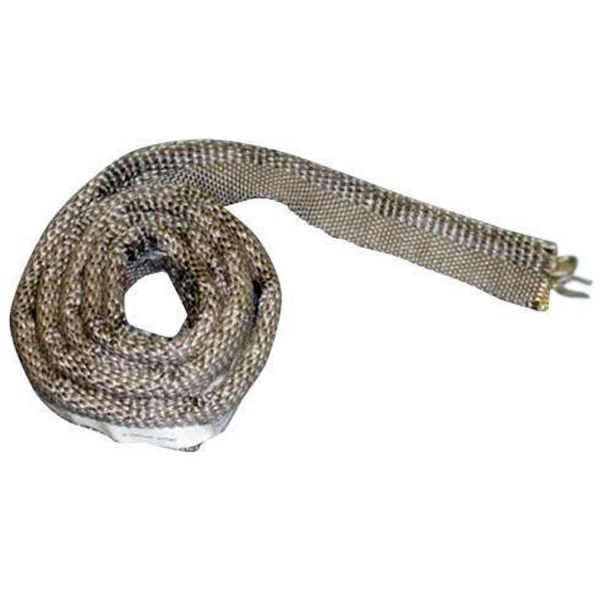
An Inconel core is not required simply because a furnace operates at high temperature.
It becomes relevant when the metallic core itself needs to retain useful structural behavior in demanding thermal conditions or where the gasket requires internal metallic reinforcement.
Core selection should consider:
The cover and core should be selected as one system. A high-performance metal core cannot compensate for an unsuitable outer textile, stitching material or mounting arrangement.
A ceramic core provides a non-metallic high-temperature option inside the bulb.
It can be paired with silica or ceramic fabric according to the required outer surface. This type of construction can be considered where the application requires high-temperature fiber materials without a metallic internal core.
Core density and finished bulb construction still affect compression behavior. Two ceramic-core gaskets with the same outside dimensions should not automatically be assumed to have the same closing force.
Some furnace doors create a second problem in addition to heat: mechanical rubbing.
If a gasket repeatedly contacts a rough edge, slides against surrounding metal or is exposed to heavy handling during maintenance, the outer textile may experience substantial surface wear.
For demanding thermal and mechanical conditions, BSTFLEX manufactures the Inconel Stocking Ceramic Fabric Cover Ceramic Core Tadpole Gasket .
In this multi-layer construction, the metallic stocking provides an additional external protective structure around the ceramic textile and core.
Adding reinforcement does not remove the need to correct sharp edges, excessive sliding or door misalignment. Equipment geometry should be reviewed whenever abrasion is severe.
| Application Requirement | Construction to Evaluate | Primary Reason |
|---|---|---|
| Moderate thermal exposure | Fiberglass-based tadpole gasket | Flexible general thermal sealing where the verified gasket temperature is suitable |
| Higher thermal exposure with treated fiberglass | Vermiculite treated fiberglass | Alternative fiberglass surface construction |
| High-temperature textile with non-metallic core | Silica cover + ceramic core | High-temperature fiber construction without metallic bulb reinforcement |
| High-temperature textile with metallic reinforcement | Silica cover + Inconel core | Thermal textile combined with reinforced internal structure |
| Demanding high-temperature fiber construction | Ceramic cover + ceramic core | Ceramic textile and fiber combination |
| High temperature with internal metallic support | Ceramic cover + Inconel core | Ceramic outer layer combined with metallic core reinforcement |
| High temperature plus significant surface wear | Inconel stocking + ceramic fabric + ceramic core | Additional external mechanical reinforcement |
This table is a selection guide, not a universal temperature chart. Final suitability depends on the exact material grades and operating conditions.
A furnace door may not maintain exactly the same geometry from cold startup to full operating temperature.
Metal frames, refractory structures and fastening components can expand differently. The sealing gap may therefore change around the perimeter as the furnace heats and cools.
For replacement or OEM design, measure or evaluate:
Do not solve a distorted door simply by selecting an oversized bulb. Excessive compression at the tightest location can increase closing force and shorten useful gasket life.
There is no universal compression percentage for every tadpole gasket.
If the free bulb height and installed height are known, nominal compression can be calculated as:
Compression (%) = (Free Bulb Height - Installed Bulb Height) / Free Bulb Height x 100
For example, if a proposed bulb has a free height of 20 mm and the installed height is 15 mm, the calculated dimensional compression is 25%.
This calculation describes geometry only. It does not prove that 25% is suitable for that material or core.
The correct working compression should be validated against:
A flattened bulb may indicate long service, excessive compression, unsuitable core construction or thermal degradation.
Do not simply reproduce its worn height as the replacement dimension.
Possible causes include frame distortion, hinge movement, latch adjustment, incorrect bulb size or permanent compression of the old gasket.
Check for sharp retaining hardware, exposed metal edges, sliding contact and excessive handling before changing only the textile material.
Review tail width, clamp engagement, retaining-strip geometry and fastener spacing.
A small damaged area can indicate direct hot-gas leakage or a local hot spot rather than an overall material-temperature problem.
Record both the old gasket and the equipment dimensions.
For the gasket cross-section, measure:
For the furnace, record:
A worn gasket should be treated as reference evidence rather than an exact representation of the original new profile.
When drawings are unavailable, BSTFLEX can review a physical sample together with application information.
For better replacement accuracy, provide:
If the existing core alloy or textile material is unknown, identify it as unknown rather than assigning an assumed specification.
For new furnaces and thermal-processing equipment, gasket selection should begin during the door and frame design stage rather than after fabrication.
Useful OEM design inputs include:
| Specification Item | Information Needed |
|---|---|
| Door geometry | Cross-section, perimeter dimensions, corner radii and retaining details |
| Seal gap | Nominal, minimum and maximum closed gap |
| Temperature | Continuous and peak temperature at the gasket location |
| Cover | Fiberglass, silica, ceramic or other required textile |
| Core | Fiber, ceramic, stainless steel, Inconel or other specified construction |
| Compression | Installed bulb height and available closing force |
| Operation | Expected door opening frequency and thermal cycles |
| Quantity | Prototype requirement and estimated production volume |
BSTFLEX supports custom profile development, sample production and OEM manufacturing through its custom tadpole gasket manufacturing service .
Where a new material or core construction is introduced, prototype evaluation should confirm more than basic dimensional fit.
Check:
If the furnace has a defined leakage or process-containment requirement, evaluate the complete joint according to the equipment's applicable test criteria.
A textile tadpole gasket should not automatically be described as gas-tight or pressure-rated without relevant system validation.
High-temperature tadpole seals can be considered for:
For an efficient technical review and quotation, send:
The appropriate gasket depends on seal-line temperature, gap, door movement and required compression. Tadpole gaskets using fiberglass, silica or ceramic covers with fiber or metallic cores are among the constructions used for industrial furnace door sealing.
No. The highest-temperature material is not automatically the best choice. The cover, core, abrasion conditions, flexibility, compression requirements and actual gasket temperature should all be considered.
An Inconel core can be evaluated where metallic reinforcement is required in a demanding thermal environment. It should be selected according to the actual core temperature and mechanical requirements rather than furnace temperature alone.
Not automatically. Ceramic and metallic cores can have different compression, recovery and reinforcement characteristics. Changing the core should be evaluated as a new gasket construction.
Yes. Custom replacement profiles can be developed from drawings, equipment dimensions, photographs and physical samples. A worn gasket should be supplemented with actual equipment measurements whenever possible.
Yes. Bulb dimensions, tail dimensions, overall profile, core construction and finished length can be manufactured according to the furnace design.
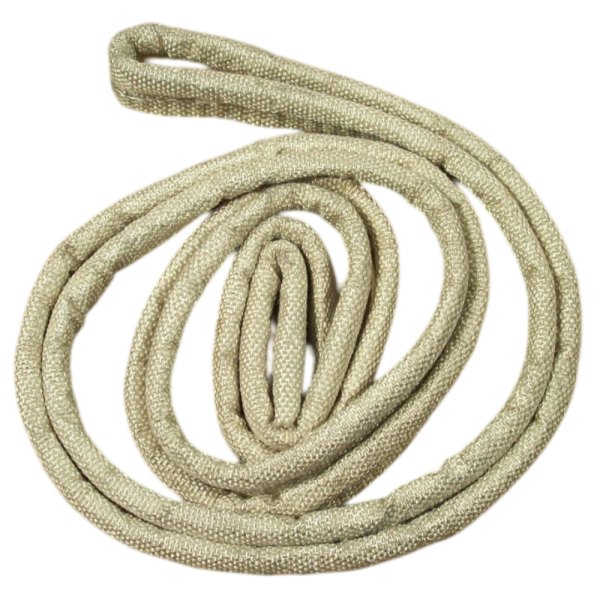
BSTFLEX manufactures custom furnace door tadpole gaskets, high temperature furnace seals and replacement gasket profiles for OEM furnace manufacturers, industrial maintenance companies and thermal-processing equipment.
For high-temperature applications, review the available silica and Inconel construction, silica and ceramic core construction, ceramic cover and ceramic core construction, ceramic cover and Inconel core construction, and Inconel reinforced ceramic construction.
Send BSTFLEX your furnace gasket drawing, sample and operating conditions for a quotation.

 français
 Deutsch
 русский
 italiano
 español
 português
 Nederlands
 العربية
 日本語
日本語 한국의
한국의 Türkçe
 Polski
 Tiếng Việt
 slovenský
 Indonesia