français
 Deutsch
 русский
 italiano
 español
 português
 Nederlands
 العربية
 日本語
日本語 한국의
한국의 Türkçe
 Polski
 Tiếng Việt
 slovenský
 Indonesia



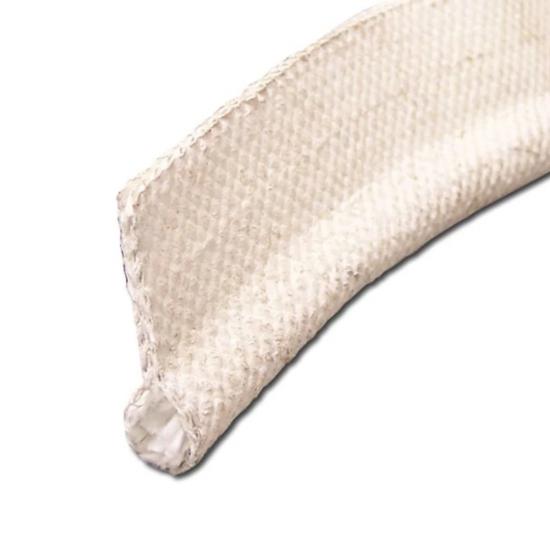

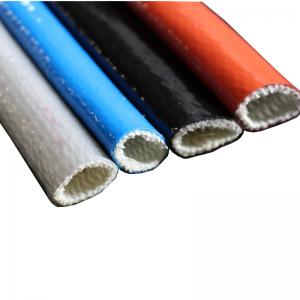
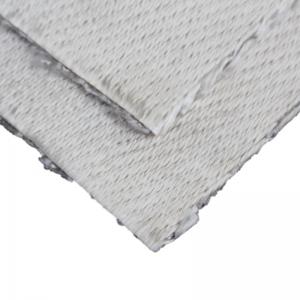
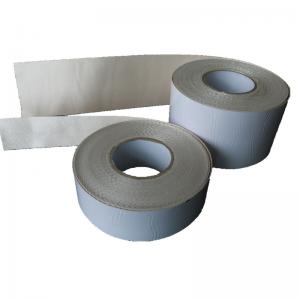
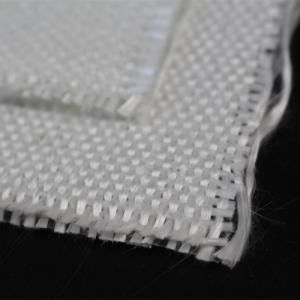
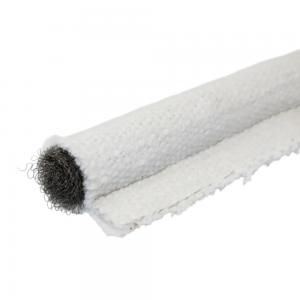
PTFE Coated Fiberglass Cover Fiberglass Core Tadpole Gasket
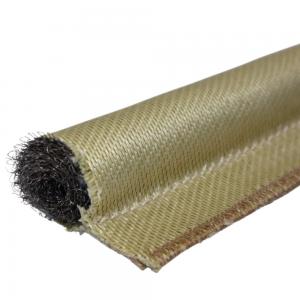
The PTFE Coated Fiberglass Cover Fiberglass Core Tadpole Gasket is a flexible thermal sealing solution developed for doors, covers, dampers, ducts, panel joints, enclosures and other equipment requiring a resilient gasket with good chemical resistance and broad temperature capability.
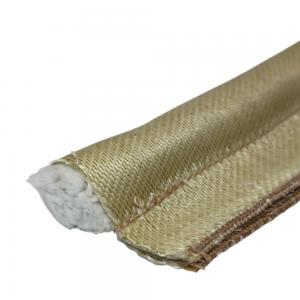
Its construction combines a PTFE-coated woven fiberglass cover with a fiberglass rope core. The coated fiberglass outer layer provides a durable protective surface, while the fiberglass core forms the compressible sealing section and helps the gasket maintain its profile during installation and repeated compression.
The rounded tadpole bulb is designed to contact the mating surface while the attached tail provides a practical mounting section. This configuration allows the gasket to follow curved or uneven sealing paths and provides a flexible barrier around doors, covers and access openings.
BSTFLEX manufactures custom PTFE coated fiberglass tadpole gaskets for OEM equipment, replacement applications and specialized sealing systems. Bulb diameter, tail dimensions, overall length and profile configuration can be produced according to the required application.
PTFE Coated Fiberglass and Fiberglass Core Construction
This gasket uses two complementary materials rather than relying on a single layer to perform every function. The outer PTFE-coated fiberglass fabric provides the exposed working surface, while the fiberglass core gives the tadpole profile its body and resilience.
| Component | Function |
|---|---|
| PTFE-coated fiberglass cover | Creates the outer protective surface with resistance to many chemicals and a flexible textile construction. |
| Fiberglass rope core | Forms the internal sealing bulb and provides compressibility, resilience and profile support. |
| Sealing bulb | Compresses against the mating surface to form the primary sealing interface. |
| Mounting tail | Provides the attachment area for installation on a door, frame, panel or equipment structure. |
Why Use a PTFE Coated Fiberglass Cover?
The outer cover is made from woven fiberglass with a PTFE coating. This combination is useful where the gasket surface may encounter chemicals, moisture, process contamination or repeated temperature changes.
PTFE provides a chemically resistant surface while the fiberglass substrate contributes flexibility and thermal stability. Together, these materials create an outer layer that is suitable for applications where an untreated textile gasket may not provide the desired surface characteristics.
- PTFE-coated woven fiberglass construction
- Good resistance to many industrial chemicals
- Flexible textile structure
- Suitable for repeated thermal cycling
- Resistant to moisture and environmental exposure
- Useful for applications requiring a non-metallic sealing surface
- Suitable for low-temperature service when properly specified
Fiberglass Core for Flexible Compression
The internal fiberglass rope core gives the gasket its rounded sealing profile. Unlike a rigid metal insert, the textile core is flexible and can compress as the door or panel closes.
This construction is particularly useful when the mating surfaces are not perfectly uniform. The bulb can deform under compression and adapt to variations in the sealing path, helping maintain contact along the joint.
The fiberglass core also keeps the overall gasket lightweight while providing the structure required for a consistent tadpole profile.
Designed for Thermal Cycling and Uneven Surfaces
Industrial doors and access panels rarely remain at a single temperature. During operation, the gasket can experience heating, cooling, compression and recovery cycles.
The PTFE-coated fiberglass cover and fiberglass core work together to provide a flexible construction that can accommodate repeated thermal changes. The bulb profile can also conform to minor variations in the mating surface, making this type of gasket suitable for uneven or irregular sealing areas.
Correct compression is important. The gasket should be compressed enough to establish a continuous sealing interface without excessively crushing the fiberglass core.
Temperature Capability
PTFE coated fiberglass tadpole gasket constructions are commonly selected for applications requiring both elevated-temperature capability and low-temperature flexibility. The referenced PTFE-coated fiberglass/fiberglass-core construction is specified for an operating range of approximately -100°F to +500°F (-73°C to +260°C). :contentReference[oaicite:1]{index=1}
The actual allowable operating temperature for a BSTFLEX gasket should be determined according to the selected PTFE coating, fiberglass construction, core density, compression conditions, chemical exposure and service environment.
For applications outside this range, BSTFLEX can evaluate alternative tadpole constructions using different cover and core materials.
Excellent Choice for Low Temperature and Cryogenic Sealing
One of the important characteristics of PTFE-coated fiberglass construction is its ability to remain flexible at substantially lower temperatures than many conventional thermal sealing materials.
This makes the construction useful for selected cryogenic and low-temperature applications where the gasket must maintain flexibility rather than becoming excessively stiff or brittle.
For cryogenic systems, the complete sealing assembly should be evaluated as a system. Temperature range, pressure, media, compression, thermal contraction and mounting design should all be considered before selecting the final gasket profile.
Chemical Resistance for Industrial Sealing
PTFE is widely selected when chemical resistance is an important requirement. The coated fiberglass surface provides a protective outer layer that can resist exposure to many industrial fluids and chemicals.
This characteristic can make PTFE coated fiberglass tadpole gaskets suitable for equipment where conventional textile covers may be exposed to solvents, fuels, moisture or process chemicals.
Chemical compatibility should always be evaluated against the actual concentration, temperature, exposure time and chemical combination. Particularly aggressive media and high-temperature chemical environments may require a different material construction.
Where PTFE Fiberglass Tadpole Gaskets Are Used
Oven Doors
Used around industrial oven doors and covers where a flexible thermal seal is required between moving and stationary surfaces.
Dampers
Suitable for selected damper sealing applications where the gasket must follow the perimeter of a moving or removable component.
Duct Connections
Can be incorporated into thermal or process duct sealing systems where flexibility and surface conformity are important.
Panel Joints
Provides a flexible sealing interface between panels, covers and equipment frames.
Thermal Enclosures
Used around access doors and removable covers to help create a thermal barrier around equipment openings.
Cryogenic Equipment
Suitable for selected low-temperature applications where maintaining gasket flexibility is a key requirement.
PTFE Tadpole Gasket for Oven and Equipment Doors
The bulb-and-tail design makes this gasket especially useful for perimeter sealing. The bulb acts as the compression element, while the tail provides a dedicated mounting section.
When the door closes, the bulb is compressed against the opposing surface. This creates a continuous sealing interface around the opening while allowing the gasket to accommodate small dimensional variations.
For oven doors, thermal cabinets, processing chambers and equipment covers, the gasket profile can be selected according to the available mounting area and required compression.
Benefits of the PTFE Fiberglass Construction
| Requirement | PTFE Coated Fiberglass / Fiberglass Core Solution |
|---|---|
| Chemical exposure | PTFE coating provides resistance to many chemicals and process contaminants. |
| Temperature cycling | Flexible fiberglass construction is suitable for repeated thermal changes when properly specified. |
| Low-temperature flexibility | The construction can remain flexible in low-temperature service within its specified operating range. |
| Uneven surfaces | The compressible bulb can conform to minor variations in the mating surfaces. |
| Thermal sealing | The gasket creates a flexible barrier around doors, panels, covers and joints. |
| Mechanical resilience | The fiberglass core supports the sealing profile while allowing compression and recovery. |
Custom Tadpole Gasket Profiles
Tadpole gaskets are not limited to one standard cross-section. The required profile depends on the available installation space, compression distance and shape of the equipment opening.
BSTFLEX can manufacture custom PTFE coated fiberglass tadpole gaskets based on engineering drawings, physical samples, dimensions or application specifications.
| Custom Feature | Available Configuration |
|---|---|
| Bulb diameter | Customized according to sealing and compression requirements |
| Tail width | Customized to suit the mounting area |
| Gasket length | Supplied according to equipment dimensions |
| Profile geometry | Custom profiles available for OEM applications |
| Fiberglass core density | Selected according to compression and resilience requirements |
| PTFE coating construction | Selected according to the application and required surface characteristics |
Technical Specifications
| Item | Specification |
|---|---|
| Product type | Tadpole gasket / tadpole seal |
| Outer cover | PTFE coated woven fiberglass |
| Core | Fiberglass rope core |
| Profile | Bulb and mounting tail |
| Temperature range | Approximately -100°F to +500°F (-73°C to +260°C), depending on construction and service conditions |
| Chemical resistance | Good resistance to many industrial chemicals; compatibility should be confirmed for the specific media |
| Low-temperature service | Suitable for selected low-temperature and cryogenic applications |
| Bulb diameter | Customizable |
| Tail dimensions | Customizable |
| Overall length | Customizable |
| Profile type | Custom profiles available |
PTFE Coated Fiberglass Tadpole Gasket Applications
This gasket construction can be considered for equipment where thermal sealing is combined with chemical exposure, thermal cycling or low-temperature requirements.
- Industrial oven doors
- Oven covers
- Thermal processing equipment
- Damper sealing
- Thermal ducts
- Panel joints
- Equipment enclosures
- Access doors
- Powder coating equipment
- Automotive thermal equipment
- Cryogenic equipment
- OEM thermal sealing systems
Why Choose a Fiberglass Core Instead of a Metal Core?
The choice between a fiberglass core and a metal core depends on the mechanical and thermal requirements of the application.
A fiberglass core provides a lightweight, non-metallic internal structure with useful flexibility and compressibility. It is therefore attractive for applications where the gasket must deform easily, follow uneven surfaces or avoid introducing a metal component into the sealing profile.
Metal-core tadpole gaskets may be preferred where additional structural reinforcement, spring-back or mechanical strength is required. BSTFLEX can help determine which core construction is appropriate based on temperature, compression, movement and installation requirements.
PTFE Coated Fiberglass vs. Uncoated Fiberglass
| Characteristic | PTFE Coated Fiberglass | Uncoated Fiberglass |
|---|---|---|
| Outer surface | PTFE-coated textile surface | Exposed fiberglass textile |
| Chemical resistance | Enhanced surface resistance to many chemicals | Depends primarily on the fiberglass construction and application |
| Low-temperature service | Well suited to applications requiring low-temperature flexibility when properly specified | Depends on the specific fiberglass construction |
| Surface characteristics | Smooth coated surface | Textile surface |
| Typical selection reason | Chemical resistance, thermal cycling and low-temperature flexibility | High-temperature textile sealing and thermal protection |
Installation and Compression
The gasket should be installed so that the sealing bulb contacts the mating surface continuously around the required perimeter.
The mounting tail should be secured according to the equipment design. Depending on the application, suitable attachment methods may include mechanical fasteners, retaining channels, clips or other purpose-designed mounting arrangements.
Excessive compression should be avoided. The gasket needs sufficient space to deform and recover without permanently crushing the fiberglass core.
For doors and covers that are opened frequently, the mounting arrangement should also prevent the gasket from being pulled, twisted or displaced during operation.
OEM and Replacement Gasket Manufacturing
BSTFLEX supplies custom PTFE coated fiberglass tadpole gaskets for both original equipment and replacement applications.
OEM customers can provide drawings or dimensional specifications for new gasket development. For replacement projects, an existing gasket sample, photographs and basic dimensional information can be used to establish the required profile.
Where the original gasket has become compressed, hardened or damaged, it is important to measure the original installation area rather than relying only on the compressed dimensions of the used gasket.
How to Specify the Right PTFE Tadpole Gasket
The following information is useful when selecting a PTFE coated fiberglass tadpole gasket:
- Required bulb diameter
- Tail width and thickness
- Total gasket length
- Door, panel or opening dimensions
- Available compression space
- Normal operating temperature
- Minimum operating temperature
- Contact chemicals or process media
- Expected thermal cycling
- Mounting method
- Existing gasket sample or drawing
Providing these details allows the gasket construction to be selected according to the actual operating conditions rather than simply matching a nominal gasket diameter.
Frequently Asked Questions
What is a PTFE coated fiberglass tadpole gasket?
It is a bulb-and-tail sealing gasket consisting of a PTFE-coated woven fiberglass outer cover and an internal fiberglass core. The bulb provides the compression seal while the tail provides the mounting section.
What is the fiberglass core used for?
The fiberglass core forms the internal body of the sealing bulb. It provides flexibility, compressibility and profile support while allowing the gasket to conform to uneven surfaces.
What temperature can a PTFE coated fiberglass tadpole gasket handle?
The referenced PTFE-coated fiberglass/fiberglass-core construction is specified at approximately -100°F to +500°F (-73°C to +260°C). Actual performance depends on the specific materials, profile and service conditions. :contentReference[oaicite:2]{index=2}
Can PTFE fiberglass tadpole gaskets be used in cryogenic applications?
They can be considered for selected low-temperature and cryogenic sealing applications because the PTFE-coated fiberglass construction can maintain flexibility at low temperatures. The complete application should be reviewed for temperature, media, compression and thermal contraction.
Are PTFE coated fiberglass gaskets chemically resistant?
PTFE provides excellent resistance to many chemicals, but compatibility depends on the specific chemical, concentration, temperature and exposure conditions. Chemical compatibility should be confirmed before final material selection.
Can the gasket be made in custom sizes?
Yes. BSTFLEX can manufacture custom bulb diameters, tail dimensions, lengths and profile configurations based on drawings, samples or application requirements.
Can this gasket be used on an oven door?
Yes. The bulb-and-tail profile is suitable for selected oven door, cover and thermal enclosure sealing applications where the temperature and chemical conditions are compatible with the PTFE fiberglass construction.
Request a Custom PTFE Fiberglass Tadpole Gasket
If you need a PTFE coated fiberglass tadpole gasket with a fiberglass core for an oven, damper, duct, panel joint, thermal enclosure or low-temperature sealing application, BSTFLEX can develop the gasket according to your required dimensions and operating conditions.
Send us your drawing, existing gasket sample, dimensions, temperature range and application details. Our team can evaluate the appropriate PTFE coated fiberglass construction and customized tadpole profile for your equipment.
Contact BSTFLEX for a custom PTFE coated fiberglass tadpole gasket quotation.