français
 Deutsch
 русский
 italiano
 español
 português
 Nederlands
 العربية
 日本語
日本語 한국의
한국의 Türkçe
 Polski
 Tiếng Việt
 slovenský
 Indonesia




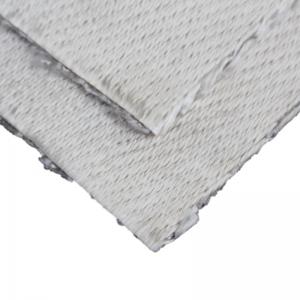
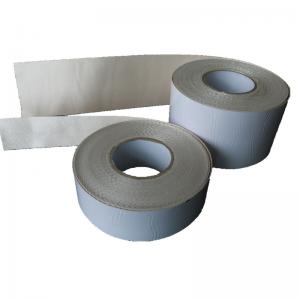
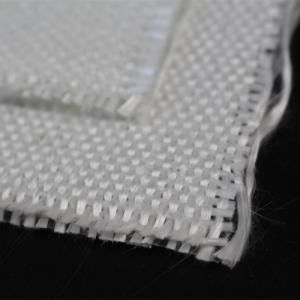
Aluminized Fiberglass Tadpole Gasket
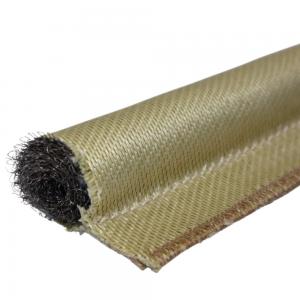
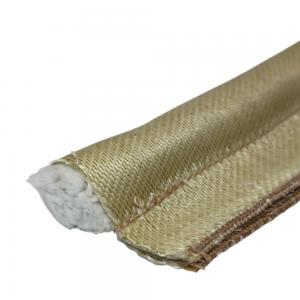
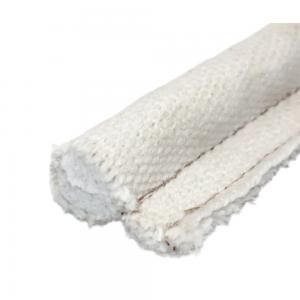
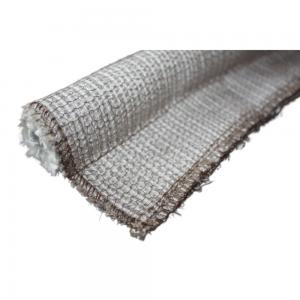
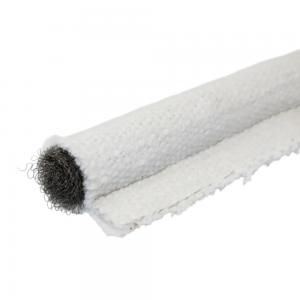
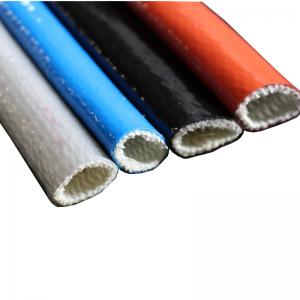
The Aluminized Fiberglass Tadpole Gasket is a flexible thermal sealing component designed for oven doors, heating equipment, thermal enclosures, access panels, covers and industrial equipment exposed to elevated temperatures and radiant heat.
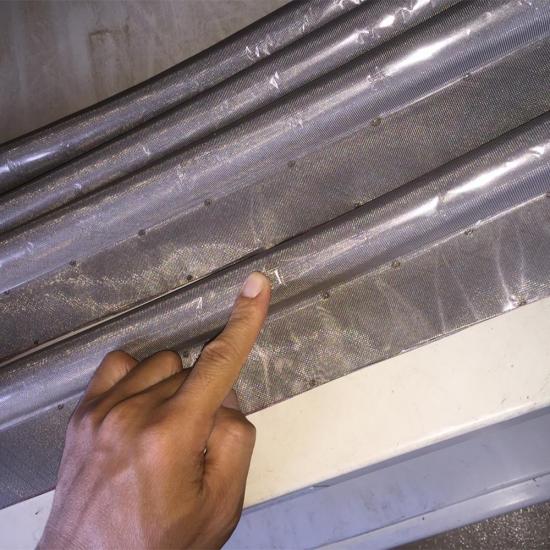
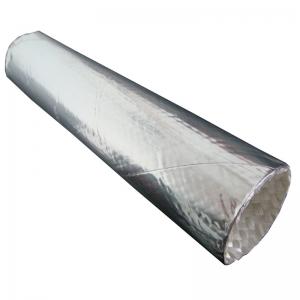
The gasket uses a woven fiberglass outer cover with an aluminized surface. The reflective exterior helps reduce the amount of radiant heat absorbed by the exposed gasket surface, while the internal core provides the flexibility and resilience needed for compression sealing.
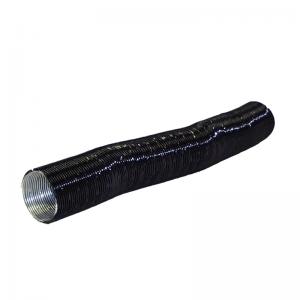
Depending on the equipment design, the tadpole gasket can be produced with different internal core constructions, including a galvanized wire core or a hollow flexible core. This allows the sealing profile to be selected according to the required combination of flexibility, resilience, mounting geometry and compression.
BSTFLEX manufactures custom aluminized fiberglass tadpole gaskets for OEM equipment, replacement applications and specialized thermal sealing systems. Bulb diameter, tail dimensions, overall length, core construction and profile geometry can be customized to match the application.
Reflective Aluminized Fiberglass Construction
The outer cover is the primary environmental layer of the gasket. It consists of fiberglass fabric combined with an aluminized surface designed to reflect radiant heat.
This construction is particularly useful around hot equipment where radiant energy from the process or heated surfaces can directly reach the gasket. Instead of relying solely on the fiberglass substrate to absorb thermal exposure, the reflective outer surface helps redirect radiant energy away from the gasket.
| Gasket Component | Primary Function |
|---|---|
| Aluminized fiberglass cover | Provides the exposed thermal protection layer and reflects radiant heat. |
| Internal core | Provides the body, resilience and compressibility of the tadpole profile. |
| Sealing bulb | Compresses against the mating surface to establish the primary thermal seal. |
| Mounting tail | Provides a dedicated section for attaching the gasket to a door, frame or panel. |
How the Aluminized Surface Helps Manage Radiant Heat
Radiant heat behaves differently from direct conductive heat. Hot surfaces inside ovens, furnaces and thermal equipment can transfer energy through radiation even when there is no direct physical contact.
The aluminized surface of the fiberglass cover provides a reflective exterior that can reduce radiant heat absorption at the gasket surface. This makes aluminized fiberglass particularly useful for sealing locations positioned close to hot equipment surfaces.
The reflective layer should be considered part of the overall thermal management system. Actual gasket temperature depends on surrounding air temperature, radiation intensity, contact conditions, airflow, compression and the design of the equipment.
Galvanized Core and Hollow Core Options
Aluminized fiberglass tadpole gaskets can be manufactured with different internal constructions. Two useful configurations are a galvanized wire core and a hollow flexible core.
| Core Construction | Design Characteristic | Typical Selection Consideration |
|---|---|---|
| Galvanized wire core | Provides internal reinforcement and profile support. | Useful where additional structural stability and resilience are required. |
| Hollow core | Provides a lightweight and highly flexible sealing structure. | Useful where easy compression and surface conformity are priorities. |
The appropriate core depends on the compression distance, mounting configuration, door movement, required flexibility and operating environment. BSTFLEX can recommend the core construction after reviewing the application.
Compression Sealing with a Tadpole Profile
The defining feature of a tadpole gasket is its bulb-and-tail geometry. The rounded bulb acts as the compressible sealing element, while the tail is used to position and secure the gasket.
- Mounting: The tail is installed along the door, frame, panel or equipment perimeter.
- Positioning: The bulb is aligned with the mating sealing surface.
- Compression: Closing the door or panel compresses the bulb.
- Conformability: The flexible profile follows minor variations in the mating surface.
- Thermal separation: The compressed gasket forms a barrier around the opening or joint.
Correct bulb dimensions and compression are important. Excessive compression can permanently deform the core, while insufficient compression may leave gaps along the sealing path.
Thermal Performance
The referenced aluminized fiberglass tadpole constructions are specified for service up to approximately 500°F (260°C). The competitor products also identify high-temperature service, thermal shock resistance and radiant heat reflection as key characteristics. :contentReference[oaicite:1]{index=1}
For BSTFLEX products, the final temperature rating should be established according to the selected fiberglass fabric, aluminized coating, core material, gasket geometry and actual operating environment.
Temperature at the gasket itself can differ significantly from the internal process temperature. Radiant heat, conduction through the door or frame, airflow and compression conditions should therefore be considered when selecting the material construction.
Thermal Shock and Repeated Heating Cycles
Industrial doors and covers may move repeatedly between ambient and elevated temperatures. This creates thermal expansion and contraction within the sealing assembly.
The flexible fiberglass construction allows the gasket to accommodate repeated movement better than many rigid sealing materials. The selected core also influences how the gasket responds to compression and recovery during repeated door cycles.
For equipment subject to rapid temperature changes, the complete gasket construction should be selected with thermal shock, compression recovery and mounting stability in mind.
Applications for Aluminized Fiberglass Tadpole Gaskets
Industrial Oven Doors
Used around oven doors and covers to provide a flexible thermal seal while the aluminized surface helps manage radiant heat.
Heating Equipment
Suitable for selected heating equipment where doors, panels and access openings require a compressible thermal gasket.
Thermal Enclosures
Provides perimeter sealing around thermal cabinets, access doors and removable covers.
Metal Casting Equipment
Can be considered for selected thermal sealing applications in metal processing and casting equipment.
Thermal Barriers
The reflective outer surface can contribute to thermal barrier designs where radiant heat exposure is a concern.
OEM Equipment
Custom profiles and core constructions can be developed for original equipment and replacement gasket programs.
Oven Door and Thermal Enclosure Sealing
Oven doors and thermal enclosure panels require a gasket that can compress repeatedly without losing its basic profile. A tadpole gasket separates the mounting function from the primary sealing function, making it practical for perimeter sealing.
The tail can be positioned along the door or frame while the rounded bulb faces the mating surface. When the door closes, the bulb compresses and forms the contact interface.
The aluminized fiberglass cover adds a reflective thermal surface to the sealing assembly, making this construction useful where the gasket is exposed to radiant energy from heated equipment.
Advantages of Aluminized Fiberglass Gasket Construction
| Requirement | Aluminized Fiberglass Tadpole Gasket |
|---|---|
| Radiant heat | Reflective aluminized surface helps redirect radiant heat. |
| Thermal sealing | Compressible tadpole bulb creates a flexible barrier around doors and openings. |
| Flexibility | Fiberglass textile and flexible core construction can follow curved sealing paths. |
| Irregular surfaces | Compressible bulb can accommodate minor variations in mating surfaces. |
| Thermal cycling | Flexible construction can accommodate repeated heating and cooling cycles when properly specified. |
| Core selection | Galvanized wire and hollow core configurations can be selected according to application requirements. |
Custom Aluminized Fiberglass Tadpole Gaskets
Equipment manufacturers often require gasket profiles that cannot be replaced by a standard size. Door geometry, mounting space and compression distance determine the appropriate bulb and tail dimensions.
BSTFLEX can manufacture custom aluminized fiberglass tadpole gaskets according to engineering drawings, existing gasket samples, dimensional specifications or application requirements.
| Custom Parameter | Configuration |
|---|---|
| Bulb diameter | Customized according to the required compression and sealing gap. |
| Tail width | Matched to the available mounting area. |
| Tail thickness | Customized according to the installation method. |
| Gasket length | Produced according to door, panel or frame dimensions. |
| Core construction | Galvanized wire, hollow or other suitable configurations. |
| Profile geometry | Custom bulb-and-tail profiles available for OEM applications. |
Technical Specifications
| Item | Specification |
|---|---|
| Product type | Tadpole gasket / tadpole seal |
| Outer cover | Aluminized fiberglass fabric |
| Core options | Galvanized wire core or hollow core |
| Profile | Bulb and mounting tail |
| Reflective surface | Aluminized outer surface |
| Temperature reference | Up to approximately 500°F / 260°C depending on material construction and service conditions |
| Thermal shock resistance | Suitable for applications involving thermal cycling when properly specified |
| Bulb diameter | Customizable |
| Tail dimensions | Customizable |
| Overall length | Customizable |
| Profile configuration | Custom profiles available |
Aluminized Fiberglass vs. Standard Fiberglass Cover
Both constructions can be used for thermal sealing, but their outer surfaces behave differently when exposed to radiant heat.
| Characteristic | Aluminized Fiberglass | Standard Fiberglass |
|---|---|---|
| Outer surface | Reflective aluminized surface | Exposed fiberglass textile |
| Radiant heat management | Reflects radiant heat | Primarily relies on the thermal properties of the textile |
| Thermal barrier applications | Well suited where radiant heat is a design consideration | Suitable for conventional thermal protection applications |
| Visual surface | Metallic reflective appearance | Textile appearance |
| Selection priority | Radiant heat reflection and thermal sealing | Thermal textile protection and sealing |
Choosing Between a Galvanized Core and Hollow Core
The internal core should be selected based on how the gasket will be compressed and mounted.
Galvanized Wire Core
A galvanized wire core provides a reinforced internal structure and can help the gasket maintain its profile during handling and installation. It can be considered where the gasket needs additional internal support while retaining a flexible sealing shape.
Hollow Core
A hollow core creates a lightweight and highly compressible bulb. This configuration can be useful where the gasket must deform easily under relatively low closing force or conform to variations in the mating surface.
The correct choice depends on the equipment design. BSTFLEX can evaluate the required compression force, sealing gap, mounting arrangement and operating conditions before recommending the core construction.
Installation Considerations
Correct installation has a direct effect on sealing performance. The gasket should be mounted so that the bulb remains aligned with the mating surface throughout the door or panel movement.
The tail should be secured using the fastening method appropriate for the equipment design. The mounting system should prevent excessive movement, twisting or displacement during repeated operation.
The bulb should not be excessively compressed. Adequate clearance must be provided for the gasket to deform while maintaining continuous contact with the opposing surface.
OEM and Replacement Gasket Manufacturing
BSTFLEX supplies aluminized fiberglass tadpole gaskets for both OEM equipment and replacement applications.
For OEM projects, engineering drawings can be used to develop the required profile and core construction. For replacement projects, an existing gasket sample, photographs and dimensional information can help identify the appropriate profile.
When measuring an old gasket, it is important to account for permanent compression and deformation. The original mounting space and sealing gap generally provide more useful information than the compressed dimensions of a used gasket.
Applications
- Industrial oven door seals
- Commercial oven door seals
- Stove door thermal seals
- Heating equipment doors
- Thermal enclosure seals
- Thermal chamber access panels
- Industrial equipment covers
- Metal processing equipment
- Metal casting equipment
- Thermal barrier assemblies
- OEM thermal equipment
- Replacement thermal gaskets
How to Specify an Aluminized Fiberglass Tadpole Gasket
For a correct gasket selection, the following information should be considered:
- Required bulb diameter
- Tail width and thickness
- Overall gasket length
- Door or panel dimensions
- Available compression gap
- Operating temperature
- Radiant heat exposure
- Thermal cycling frequency
- Required core construction
- Mounting method
- Contact chemicals or process media
- Existing gasket sample or drawing
Providing this information allows the gasket to be engineered around the actual equipment rather than selecting a profile based only on nominal dimensions.
Frequently Asked Questions
What is an aluminized fiberglass tadpole gasket?
An aluminized fiberglass tadpole gasket is a bulb-and-tail thermal seal made with a woven fiberglass cover featuring an aluminized reflective surface. The internal core provides the flexible structure required for compression sealing.
What does the aluminized coating do?
The aluminized surface reflects radiant heat and provides a protective outer layer. It is particularly useful when the gasket is installed near hot surfaces or radiant heat sources.
What temperature can an aluminized fiberglass tadpole gasket withstand?
The referenced aluminized fiberglass constructions are rated to approximately 500°F / 260°C. Actual operating capability depends on the specific cover, coating, core, profile and service environment. :contentReference[oaicite:2]{index=2}
What is the difference between a galvanized core and hollow core?
A galvanized wire core provides internal reinforcement and profile support, while a hollow core provides a lightweight and highly compressible sealing structure. The appropriate configuration depends on the required compression and mechanical behavior.
Can this gasket be used on an oven door?
Yes. Aluminized fiberglass tadpole gaskets are well suited to selected oven door, stove door and thermal enclosure applications where the operating conditions are compatible with the gasket construction.
Does the aluminized surface reflect radiant heat?
Yes. The reflective aluminized surface is designed to reflect radiant heat, making it useful in thermal barrier and high-radiant-heat environments.
Can the gasket be manufactured in custom sizes?
Yes. BSTFLEX can manufacture custom bulb diameters, tail dimensions, lengths, core configurations and profile geometries according to drawings, samples or application requirements.
Can BSTFLEX manufacture replacement aluminized fiberglass gaskets?
Yes. Replacement gaskets can be developed from an existing sample, dimensional measurements, engineering drawings or application information.
Request a Custom Aluminized Fiberglass Tadpole Gasket
If you need an aluminized fiberglass tadpole gasket for an oven door, heating system, thermal enclosure, access panel or industrial equipment application, BSTFLEX can develop the required profile and core construction.
Send us your drawing, gasket sample, dimensions, operating temperature and application details. We can evaluate the appropriate aluminized fiberglass construction and recommend a galvanized wire core, hollow core or other suitable configuration.
Contact BSTFLEX for a custom aluminized fiberglass tadpole gasket quotation.