

item no.:
SCTorder(moq):
500m each sizePayment:
CIF, FOB, EXWproduct origin:
CHINAColor:
White, red, black, blue, orange etcshipping port:
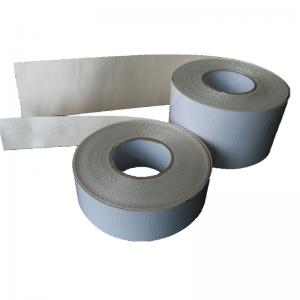
Shanghai, NingboBSTFLEX Self-Fusing Silicone Rubber Electrical Tape is a non-adhesive silicone rubber tape for industrial electrical insulation, cable bundling, protective overwrapping and maintenance applications. When stretched and wrapped over itself, the silicone layers fuse together to form a continuous rubber covering without a pressure-sensitive adhesive layer.
The tape is supplied with an easy-release liner for handling and installation. Standard widths are 25 mm and 50 mm, with multiple thicknesses and colors available. Custom width, thickness, length, color and packaging can be reviewed for OEM and repeat industrial supply.
Self-fusing silicone tape does not rely on adhesive to stick to the cable, wire or component underneath. Instead, adjacent silicone layers bond to each other when the tape is stretched and overlapped during installation.
This construction is also described as self-amalgamating silicone tape or self-bonding silicone tape. Because there is no conventional pressure-sensitive adhesive layer, the tape is useful where an industrial buyer requires a flexible wrap without adhesive residue on the protected component.
The self-fusing mechanism and the electrical insulation function are separate considerations. When the tape is specified as part of an electrical insulation system, the required dielectric performance should be confirmed for the exact tape thickness, construction and test method.
Typical industrial uses include:
For electrical, moisture-sealing or environmental-protection duties, define the required performance in the RFQ. Do not assume that a generic self-fusing tape automatically meets a particular voltage class, waterproof rating, pressure-repair requirement or flame test.
| Part Number | Thickness | Width |
|---|---|---|
| SCT-25-0.3 | 0.3 mm | 25 mm |
| SCT-25-0.4 | 0.4 mm | 25 mm |
| SCT-25-0.5 | 0.5 mm | 25 mm |
| SCT-25-1.0 | 1.0 mm | 25 mm |
| SCT-50-0.3 | 0.3 mm | 50 mm |
| SCT-50-0.4 | 0.4 mm | 50 mm |
| SCT-50-0.5 | 0.5 mm | 50 mm |
| SCT-50-1.0 | 1.0 mm | 50 mm |
| Material | Silicone rubber |
|---|---|
| Construction | Self-fusing / self-amalgamating silicone tape with release liner |
| Working Temperature | -40°C to +260°C |
| Standard Widths | 25 mm, 50 mm |
| Standard Thicknesses | 0.3 mm, 0.4 mm, 0.5 mm, 1.0 mm |
| Standard Color | Red |
| Other Colors | Black, gray, orange, blue and other colors on request |
| MOQ | 500 m per size |
| Cutting Tool | Scissors |
| Customization | Special width, thickness, length, color and packaging on request |
Make sure the cable, wire, termination or component is suitable for wrapping and is free from loose dirt and sharp edges that could damage the tape. When the tape has an electrical or environmental sealing function, follow the approved preparation procedure for the assembly.
Expose only enough tape for the next section of wrapping. Keeping the remaining liner in place can make the silicone tape easier to handle during installation.
Stretch the tape while wrapping so it conforms to the component and the overlapping silicone layers remain in close contact.
The required stretch should be established for the actual SCT construction and installation. Do not use an elongation percentage copied from another manufacturer's tape. If stretch affects the finished insulation thickness, approve a sample and record the installation method.
The current SCT installation specification uses approximately 50% overlap. Each new turn should cover about half of the previous turn.
On a straight section, this produces approximately two layers over most of the wrapped area after one spiral pass. Starts, ends, bends and transitions require separate attention.
After wrapping, press the overlapping layers together so the silicone surfaces maintain intimate contact and can self-fuse.
Check the start point, end point, bends, branches and changes in diameter for gaps, loose edges or excessive narrowing of the tape.
Where the tape performs an electrical insulation, moisture-protection or environmental-sealing function, evaluate the finished wrap against the project's required test or acceptance criteria.
Visual appearance alone does not establish dielectric, moisture-sealing or environmental performance.
| Feature | Self-Fusing Silicone Tape | Conventional Adhesive Tape |
|---|---|---|
| Bonding Method | Silicone layers fuse to each other | Adhesive bonds to the substrate and adjacent layers |
| Pressure-Sensitive Adhesive | Not used | Normally present |
| Installation | Requires controlled stretch and overlap | Normally relies on tack to the substrate |
| Adhesive Residue | No conventional adhesive residue | Depends on adhesive chemistry and service conditions |
| Qualification | Electrical and sealing performance must be confirmed for the exact construction | Performance depends on the exact backing and adhesive system |
The width should be selected according to component diameter, bend radius, access and required coverage.
25 mm tape is generally easier to handle around smaller cable bundles, tight bends, branches and complex shapes.
50 mm tape can provide faster coverage on larger cables, straight sections and wider components where the tape can lie smoothly without excessive wrinkling.
For irregular assemblies, test the proposed width on the most difficult part of the component before approving repeat production.
Thickness affects finished build-up, mechanical cushioning and the amount of silicone in the wrapped assembly.
BSTFLEX standard options include 0.3 mm, 0.4 mm, 0.5 mm and 1.0 mm.
Select thickness according to:
A thicker tape does not automatically establish a specific voltage rating. Electrical performance must be supported by the corresponding test data for the finished construction.
Self-fusing silicone rubber tapes are used in electrical applications because the material can provide insulation while remaining flexible across a wide operating-temperature range.
However, an industrial buyer should specify the required electrical duty rather than purchasing only by the words “electrical tape.”
For applications where the tape forms part of primary or supplementary electrical insulation, provide:
BSTFLEX should confirm these values from the applicable technical data for the exact SCT construction before they are included in a customer specification.
The working temperature of the silicone tape and the temperature of the protected electrical component are separate limits.
Provide the normal operating temperature, short-duration peak temperature and exposure duration at the tape location. Where repeated heating and cooling occur, include thermal cycling in the qualification process.
Do not use a raw-material or “melting point” value as the recommended continuous working temperature of the finished tape.
For cable bundling, the tape should hold the group together without creating excessive local pressure or interfering with connector movement.
For protective overwrapping, identify the area requiring coverage and keep inspection points, labels, grounding locations and connector locking features accessible where required.
At branches and changes in diameter, adjust the wrapping angle to maintain consistent overlap. A narrower tape may be more suitable where a wide tape creates folds or gaps.
Self-fusing silicone tape is versatile, but the following duties require specific product qualification and should not be assumed from the product name alone:
If one of these functions is required, provide the operating conditions and acceptance standard for technical review.
BSTFLEX can review custom requirements for industrial OEM, distributor and maintenance supply, including:
For repeat orders, specify the approved part number, dimensions, color, packaging and application requirements.
| RFQ Item | Information to Provide |
|---|---|
| Application | Electrical insulation, cable bundling, protective overwrap or other industrial use |
| Component | Cable, wire, connector, termination, bundle or equipment detail |
| Dimensions | Component outside diameter, tape width, thickness and required roll length |
| Temperature | Continuous temperature, peak temperature and exposure duration |
| Electrical Duty | Voltage class and required dielectric test if applicable |
| Environment | Moisture, outdoor exposure, oil, chemicals or vibration requiring verification |
| Supply | Color, quantity, packaging, labeling and sample requirements |
BSTFLEX supplies Self-Fusing Silicone Rubber Electrical Tape for industrial electrical insulation, cable bundling and protective wrapping.
For woven, coated, adhesive-backed and other industrial tape constructions, review the BSTFLEX High Temperature Tapes range.
Img


If you have questions or suggestions, please leave us a message,we will reply you as soon as we can!


 français
 Deutsch
 русский
 italiano
 español
 português
 Nederlands
 العربية
 日本語
 한국의
 Türkçe
 Polski
 Tiếng Việt
 slovenský
 Indonesia