
Ordering a custom exhaust insulation sleeve involves more than selecting a fiberglass material and giving an approximate pipe diameter. The sleeve has to fit the actual exhaust line, cover the correct heated section and remain practical to install around connections, bends and nearby equipment.
For heater manufacturers, marine equipment suppliers, vehicle builders and replacement-part distributors, accurate dimensional information at the RFQ stage can prevent fitting problems during production and installation.
This guide explains the measurements and installation details buyers should provide when specifying a custom exhaust hose insulation sleeve.
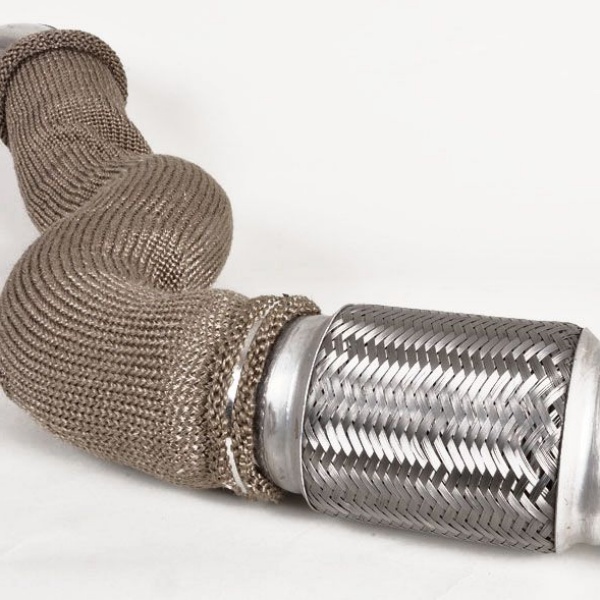
The first step is to identify exactly what will be insulated.
The component may be:
The outside dimensions of this component determine the basic sleeve dimensions.
Do not rely only on the nominal exhaust size. A product described as a 24 mm or 30 mm exhaust pipe may use that dimension to identify a connection or internal diameter, while the outside surface that the insulation must cover can be different.
For custom insulation, the useful measurement is the actual outside diameter of the component at the location where the sleeve will be installed.
ID means inside diameter. For an exhaust insulation sleeve, the ID describes the internal space available for the exhaust hose or pipe.
It is one of the most important dimensions in a custom order.
| Dimension | What It Refers To | Why It Matters |
|---|---|---|
| Exhaust Pipe OD | Actual outside diameter of the pipe or hose | Defines the component that must fit inside the sleeve |
| Sleeve ID | Inside diameter of the insulation sleeve | Controls installation fit |
| Sleeve OD | Outside diameter after insulation is added | Important where installation clearance is limited |
| Sleeve Length | Total insulated length | Determines how much of the exhaust line is protected |
A common purchasing mistake is to order an insulation sleeve using only the nominal exhaust pipe size.
For example, an exhaust system may be identified by a nominal diameter while its actual external profile is affected by corrugation, wall construction, joints or manufacturing tolerances.
For this reason, OEM buyers should preferably provide one of the following:
This is particularly important when the insulation will be fitted over a flexible or corrugated exhaust pipe.
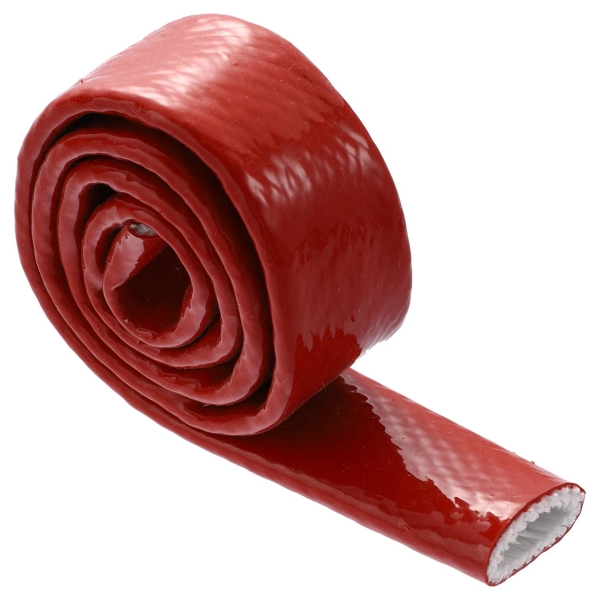
The insulation sleeve needs enough internal space to be installed over the exhaust component without unnecessary force.
However, excessive clearance is also undesirable because an oversized sleeve may not sit correctly around the exhaust line.
The appropriate fit depends on several factors:
Instead of specifying an arbitrary allowance, provide the actual pipe OD and describe how the sleeve will be installed. The insulation dimensions can then be evaluated according to the assembly.
The diameter of the exhaust tube itself is not always the largest dimension involved in installation.
If a tubular insulation sleeve must slide over a fitting, coupling, clamp area or expanded exhaust section, that larger dimension can determine whether the sleeve can be installed.
Before requesting a custom sleeve, check:
If the sleeve does not need to pass over the fittings because it is installed before final exhaust assembly, indicate this in the drawing or RFQ.
The required sleeve length should be based on the section of exhaust line that actually needs thermal protection.
Do not automatically specify the entire exhaust pipe length.
In many installations, only the section close to flooring, cables, hoses, panels or enclosed equipment needs additional insulation.
Measure the start and end points of the required insulated zone and consider:
A single long insulation sleeve is not always the best configuration.
An exhaust system with several clamps, sharp routing changes or service points may be easier to assemble with multiple insulation sections.
| Configuration | Typical Reason for Selection |
|---|---|
| One continuous sleeve | Long straight exhaust section with few interruptions |
| Two insulation sections | Clamp, bracket or service point divides the heated zone |
| Multiple short sections | Complex routing or several installation obstacles |
| Custom individual lengths | Repeatable OEM exhaust assembly |
For serial production, identifying each insulation section on the exhaust assembly drawing helps maintain consistent installation from one unit to the next.
A sleeve fitted to a straight pipe and a sleeve installed around a curved exhaust route do not experience the same geometry.
Where the insulated exhaust line includes bends, provide:
A photograph or drawing is particularly useful for compact heater installations where the exhaust changes direction immediately after leaving the heater.
For compact installations, the outside dimensions of the finished insulation can be as important as the inside diameter.
This is common in:
If the exhaust pipe passes through a restricted space, measure the available clearance around the pipe before specifying the insulation.
The finished assembly must fit within the available envelope without interfering with adjacent components.
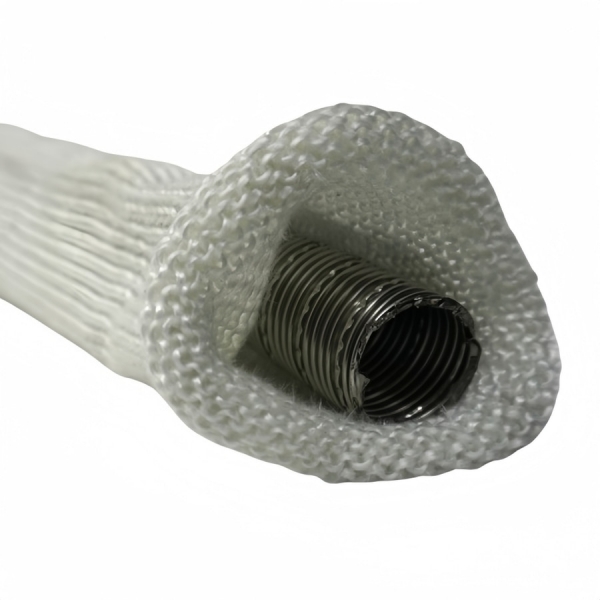
Dimensional information tells the manufacturer what size to produce. Application information explains how the sleeve will be used.
An OEM RFQ should identify whether the exhaust system is installed in:
The supplier should also know whether the insulation is exposed to vibration, frequent movement, moisture, abrasion or restricted installation space.
Marine heater installations are frequently compact, and the exhaust route may pass through equipment spaces where surrounding surfaces and components need additional thermal separation.
For a custom marine exhaust hose insulation order, useful RFQ information includes:
If several exhaust configurations are used across a product range, each version should be identified separately rather than combining all dimensions into one specification.
Diesel heater systems can use several exhaust pipe diameters depending on the heater and system design.
BSTFLEX also manufactures flexible double wall stainless steel diesel heater exhaust pipe in multiple diameters, allowing the exhaust pipe and thermal insulation requirements to be considered as part of the same system.
When purchasing an insulation sleeve separately, however, the actual exhaust pipe dimensions should still be confirmed before production.
A new OEM project usually begins with drawings and controlled dimensions. Replacement projects often begin with an existing installed exhaust system.
For replacement supply, buyers can provide:
If the original insulation is damaged or distorted, measure the exhaust component itself rather than copying dimensions from the worn insulation.
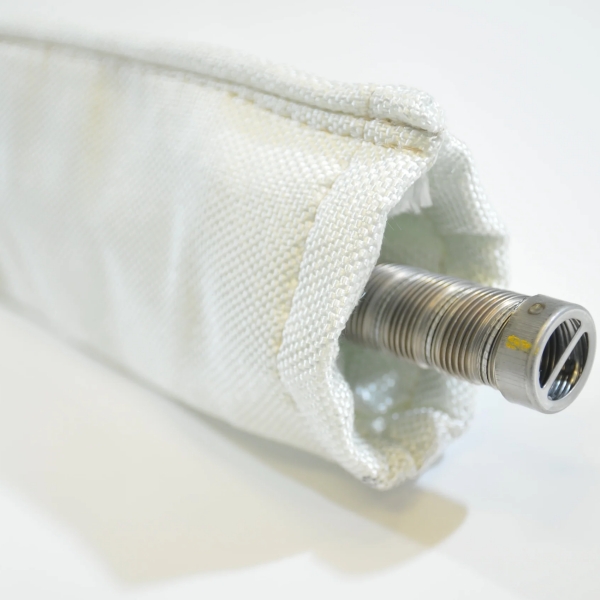
A complete RFQ can be prepared using the following checklist.
| RFQ Item | Information to Provide |
|---|---|
| Exhaust Component | Flexible pipe, rigid tube, exhaust hose or assembly |
| Pipe Outside Diameter | Actual measured OD |
| Required Sleeve ID | If already defined by drawing |
| Required Length | Overall insulation length or individual sections |
| Routing | Straight, curved or mixed |
| Largest Fitting | Dimension if sleeve must pass over it |
| Installation Space | Maximum available outside envelope where relevant |
| Application | Diesel heater, marine heater, vehicle or industrial equipment |
| Quantity | Prototype, batch quantity and estimated annual demand |
| Reference | Drawing, sample or installation photographs |
| Packaging | Bulk, individual, kit or OEM packaging requirement |
Heater output alone does not provide enough dimensional information to manufacture a fitted insulation sleeve. The actual exhaust dimensions are more useful.
The insulation surrounds the outside of the exhaust pipe. Make it clear whether every dimension in the RFQ refers to ID or OD.
A sleeve may fit the pipe perfectly but still be impossible to install if it has to slide over a larger coupling or connector.
Long insulation sections may interfere with clamps, brackets or service areas. Define the actual thermal protection zone before deciding the sleeve length.
Two systems using the same diameter can require different insulation configurations if one is straight and the other includes several bends or mounting obstacles.
For new OEM heater systems, it can be useful to define the insulation after the exhaust routing and surrounding installation space have been established.
A prototype sleeve can then be evaluated for:
Once the dimensions are confirmed, the same specification can be used for repeat production.
BSTFLEX manufactures fiberglass exhaust hose insulation sleeves with dimensions adapted to the exhaust system rather than limiting buyers to one fixed diameter or length.
Custom production can support heater manufacturers, marine equipment suppliers, RV and vehicle builders, exhaust system suppliers, distributors and industrial equipment manufacturers.
For additional heater ducting, exhaust protection and thermal management products, view our heat protection tubes product range.
For an accurate quotation, provide the exhaust pipe outside diameter, required insulated length, installation layout, quantity and any drawing or photographs available.
If several diameters or lengths are required for the same project, list each configuration separately. This allows the insulation sleeves to be produced for the actual exhaust assemblies rather than treated as one universal size.
View the Fiberglass Exhaust Hose Insulation Sleeve for custom OEM and bulk supply requirements.

 français
 Deutsch
 русский
 italiano
 español
 português
 Nederlands
 العربية
 日本語
日本語 한국의
한국의 Türkçe
 Polski
 Tiếng Việt
 slovenský
 Indonesia