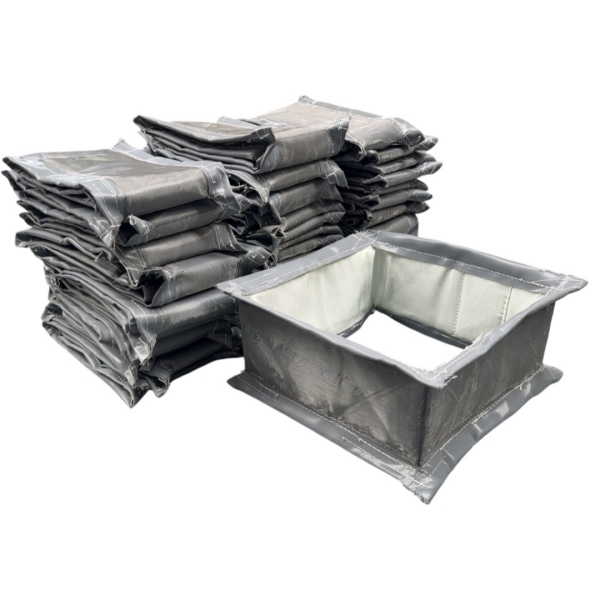
A replacement rectangular bellows can match the old cover's width and still fail to fit the machine. The mounting frame may sit at a different height, a lubrication fitting may catch the folds, or the compressed cover may occupy space needed by the moving table. For linear rails and machine ways, the replacement specification must describe the installation, not just the loose fabric cover.
BSTFLEX custom sewn rectangular bellows provide flexible protection for rectangular machine components and guideway assemblies. The profile, working lengths, fabric and attachments can be evaluated around existing equipment dimensions. A useful replacement drawing separates the protected space, the outside clearance and the connections at each end.
First establish whether the existing bellows covers a single rail, spans two parallel rails, protects a box way or encloses a rectangular actuator. Show which faces are covered and which remain open. A three-sided way cover and a fully enclosed rectangular bellows are not interchangeable simply because their overall width and height look similar.
Identify the fixed attachment and the moving attachment. On some installations, the cover ends at the carriage rather than surrounding the complete bearing block. On others, additional components sit inside the protected space. Mark this boundary clearly so that the proposed opening is sized for the actual arrangement.
Before hands-on measurement or cover removal, authorized personnel should isolate hazardous energy, control stored energy and secure components against unintended movement under the machine's maintenance procedure. Verify the safe condition before reaching into the mechanism.
A side photograph rarely shows enough to reproduce a machine way cover. Prepare a side view, a cross-section and separate views of the two mounting ends. Use the same units throughout and label any estimated dimension as unverified.
| Drawing view | Details to include | Question it resolves |
|---|---|---|
| Side view along machine travel | Attachment references, shortest and longest installed lengths, end offsets and nearby obstructions. | Can the cover reach both operating positions without being overstretched or crushed? |
| Cross-section through the protected area | Rail arrangement, required internal opening, maximum outside space, open faces and protruding components. | What must the folds and supports clear during movement? |
| Mounting views for End A and End B | Frame openings, outside frame dimensions, thickness, hole locations, orientation and fastening access. | Will the replacement attach to the machine without relocating the existing interfaces? |
Where the cross-section changes along the travel, include additional sections at the restricted locations. Label photographs to match the drawing views rather than relying on an unmarked collection of images.
For a single linear rail, record the rail and carriage arrangement together with any items that enter the cover's working space. For a cover spanning two rails, add the rail spacing and the overall protected width. Include lubrication connections, sensor brackets, bolt heads and cable attachments wherever they affect clearance.
Distinguish three sets of dimensions: the components being protected, the required unobstructed opening inside the bellows and the maximum space available outside it. Do not label all three simply as "width" and "height." If the manufacturer is to determine the running clearance, provide the actual component dimensions and state that requirement.
Height needs a defined reference surface. A dimension measured from the machine bed is not interchangeable with a dimension measured from the rail top. Show the reference on the cross-section and locate the mounting frame relative to it.
Also record corners, steps and local restrictions. A rectangular opening with rounded corners may not clear a square protrusion even when its nominal width and height appear sufficient. Check the proposed internal supports as well as the fabric opening; either can become the limiting feature.
Measure End A and End B independently. Record the clear opening, outside frame dimensions, plate thickness and the position of the attachment plane relative to the guideway. A frame that has the correct opening but mounts too low can pull the cover into the rail.
Locate mounting-hole centers from clearly identified reference edges or datums. Include hole diameters, slot dimensions, countersinks or counterbores where applicable, and the fastener type. State the viewing direction so that an asymmetric pattern cannot be mistaken for its mirror image.
Check the overlap between the fabric end and its retaining plate. Show where the first active fold begins and where the clamping area ends. The attachment must hold the cover in its intended position without trapping a working fold.
For reused hardware, supply a drawing or verified measurements of the actual parts. Identify distorted plates, damaged holes or previous field modifications. Do not make the new bellows compensate for a damaged mounting interface without an agreed repair or redesign.
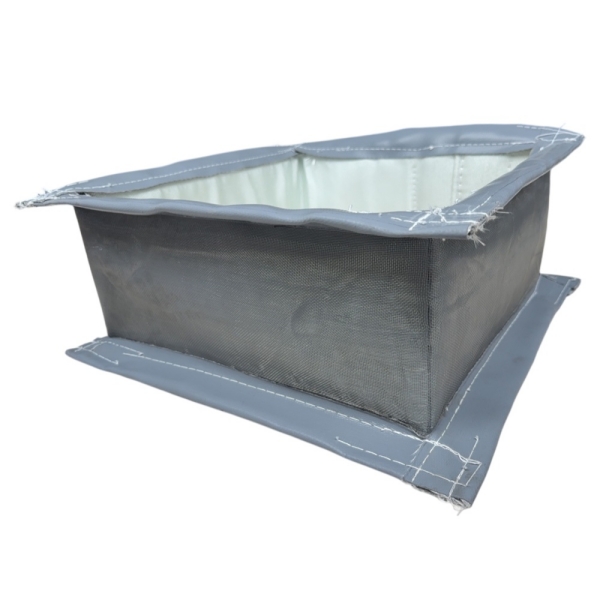
A machine may use separate bellows on opposite sides of a table or carriage. As the table moves, one cover compresses while the other extends. Treat them as separate parts unless their mounting positions and working dimensions have been confirmed identical.
Label the covers by axis and side, then record each cover's shortest and longest installed distances. Similar-looking covers can require different lengths because a bracket, drive housing or end frame changes the available space on one side.
Use the sewn bellows measurement guide to define the length references and distinguish installed length from flexible-body length. For this replacement assessment, the additional task is to verify both sides of the axis, not merely repeat the machine's nominal stroke.
Evaluate the folded package with its seams, supports and end transitions included. Copying the old fold count does not establish that a different fabric or construction will fit the same compressed space.
Record how the existing cover is supported and guided. Identify any frames, sliding elements, suspension points or intermediate supports that are part of the assembly, and state whether they will be reused. A flexible cover should not be expected to remain clear of the mechanism simply because its end dimensions are correct.
Provide the installation orientation, travel speed, acceleration where known and movement frequency. Ask for the proposed support arrangement to be reviewed against those conditions. Include ventilation requirements for closely enclosed or fast-moving assemblies rather than assuming the seams provide sufficient airflow.
Keep access to lubrication points, sensors and mounting screws in the drawing. Where a removable opening is needed, zippered sewn bellows can be evaluated separately. The opening position and the assembly route for rigid end frames still need to be checked.
Machine way bellows used in a lightly contaminated positioning system face different conditions from covers beside a cutting zone. Describe the debris, fluid contact and heat exposure before selecting the material.
For coolant exposure, provide the fluid specification, working concentration, temperature and whether contact is occasional splash or sustained spray. Evaluate the fabric coating, stitching, seams and end attachments together. A coated fabric does not automatically make a sewn assembly liquid-tight.
Hot, sharp swarf or a heavy chip load may call for additional shielding or a different cover construction. Do not specify ordinary fabric bellows as a direct replacement for a metal-armored or telescopic steel cover without reviewing the protection requirement. Matching the mounting holes is not proof of equivalent performance.
For heat-exposed rectangular bellows, BSTFLEX can evaluate technical fabrics such as silicone coated fiberglass, PTFE coated fiberglass or aluminized fiberglass. Selection depends on the exposure and repeated-flexing requirements. Confirm the limits of the finished construction rather than applying the base fabric's temperature figure to every seam, support and fastening component.
Retain the removed cover where practical and photograph its damage before disposal. The following observations can guide a replacement review, but none proves a failure cause by itself.
| Observation on the old cover | Items to investigate |
|---|---|
| A polished strip or worn patch along one side | Local interference, frame alignment, available clearance and the support path. |
| Tearing close to an end attachment | End-transition geometry, trapped folds, mounting condition and required extension. |
| Crushed or irregularly packed folds | Compressed space, trapped debris and whether the cover is being forced beyond its working range. |
| Coolant or debris beneath an apparently intact cover | Entry around open faces, end interfaces, seams, closures or ventilation openings. |
Record any changes made since the old cover was installed, including relocated sensors, replacement carriages or different coolant delivery. A replacement based only on an old drawing can miss those changes. Mark which dimensions come from the machine, which come from the sample and which remain to be confirmed.
It helps identify the guideway geometry, but it does not define the machine's mounting frames, rail spacing, adjacent equipment or available compressed space. Include the rail and carriage model information with the installation drawing.
Potentially, provided their condition, dimensions and attachment method are suitable for the new assembly. State whether the order is for the fabric cover alone or includes new plates, fasteners and supports.
Not necessarily. Thickness alone does not resolve rubbing, excessive extension, incompatible coolant or unsuitable chip exposure. A material change also requires the folded package and movement to be checked again.
Before production, confirm the drawing revision, internal opening, outside limits, working lengths, end-frame details and any supports or access features. Specify tolerances on the dimensions that control fit, and agree how they will be checked. Distinguish dimensions of the rigid frames from dimensions of the flexible body.
During installation and commissioning, follow the machine's approved procedures. Check clearance, attachment security and folding behavior through the intended travel under a controlled return-to-service process. Keep personnel clear of movement and isolate the equipment again before adjustments. Do not treat a fabric contamination cover as a substitute for required machine safety guarding.
Send BSTFLEX the machine axis and application, the three drawing views, installation photographs and the operating conditions. Include the quantity required for each distinct cover, whether mounting hardware will be reused and any problems observed with the previous assembly.
Our sewn rectangular bellows for machine protection can be evaluated for replacement and OEM requirements. Browse the custom sewn bellows range for other profiles, or request a rectangular bellows quotation with your drawings and application details.

 français
 Deutsch
 русский
 italiano
 español
 português
 Nederlands
 العربية
 日本語
日本語 한국의
한국의 Türkçe
 Polski
 Tiếng Việt
 slovenský
 Indonesia