order(moq):
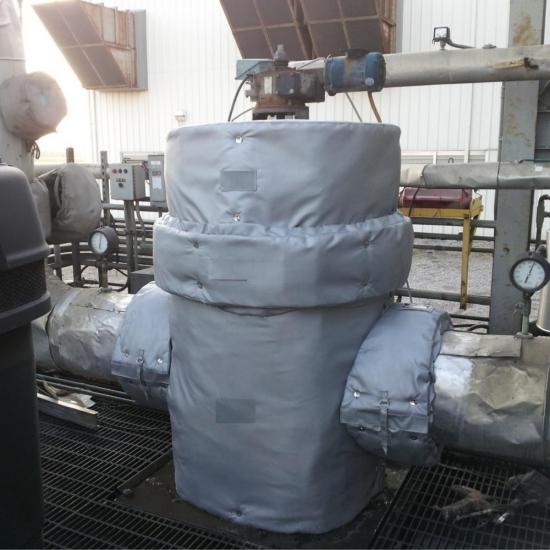
1Basket strainers have a large body and a removable lid that must be opened for screen cleaning. On a heated line, the exposed housing can interrupt an otherwise continuous insulation system. Permanent insulation around the lid and fasteners makes routine maintenance difficult and is often damaged when the basket is removed.
BSTFLEX manufactures removable basket strainer insulation jackets around the actual equipment dimensions. The cover can separate the housing, lid, flanges, drain and vent into practical sections, allowing technicians to reach the basket without cutting away surrounding insulation. Designs are available for simplex and duplex units, horizontal or vertical piping layouts and indoor or outdoor service.
| Design item | Available approach | Details needed for quotation |
|---|---|---|
| Strainer configuration | Simplex, duplex or custom multi-chamber unit | Manufacturer drawing, model and operating arrangement |
| Housing section | One-piece wrap or several numbered body panels | Body diameter, height, shape and connected nozzles |
| Lid section | Independent top cover with bolt, clamp or hinge clearances | Lid diameter, height, fastening method and opening direction |
| Drain and vent | Exposed connection, reinforced cutout or separate collar | Connection size, valve projection and operating clearance |
| Thermal construction | Custom fabric, core, thickness and closure system | Surface temperature, environment and required result |
A simplex strainer contains one working basket. The process generally has to be isolated or bypassed before the lid is opened. Its insulation jacket can often be divided into a body wrap and a separate lid cover. This arrangement lets the upper panel come off first, leaving the housing panel in place until additional access is needed.
The lid may use individual bolts, swing bolts, a clamp band, a hinged mechanism or another closure. The cover pattern must match that hardware and leave enough space for the tools used by the maintenance team. Handles, davit arms and lifting eyes also affect the shape of the top panel.
A duplex strainer normally has two basket chambers and a changeover arrangement that directs flow through one side while the other side is serviced. The insulation should reflect that operating method. Each chamber can have independently removable body and lid sections so that maintenance on one basket does not require stripping the complete assembly.
Changeover handles, gear operators, valve stems and position indicators must remain free to move. Panel identification can mark the left and right chambers, flow paths and installation positions. The responsible operator must still follow the equipment isolation and changeover procedure before opening either side.
A basket strainer and a Y-strainer perform related filtration work, but their service geometry is different. A Y-strainer usually has an angled screen chamber and an end cap. A basket strainer has a larger upright housing and a lid that opens to let the basket lift out. Duplex models add a second chamber and a changeover mechanism.
These differences affect panel divisions, fastening locations, access clearance and measurement. A Y-strainer jacket should not be enlarged and treated as a basket-strainer cover. Each design needs its own pattern and maintenance plan.
Custom basket strainer insulation covers are used where the housing operates above or below ambient temperature and requires regular access. Applications can include:
The process fluid and possible leakage must be identified during material selection. Oils, solvents, cleaning chemicals and outdoor contaminants can affect fabrics, coatings, thread, webbing and closure hardware differently.
The most important measurement is not always the housing diameter. The basket needs a clear removal path above the opened lid. A thick or poorly divided insulation panel can interfere with bolts, clamps, lid hinges, lifting devices or the basket itself.
Provide the required vertical lifting distance and show any platform, pipe, cable tray or overhead structure above the strainer. If the lid swings sideways, record the complete swing path. For a duplex unit, confirm whether both baskets have equal access or whether surrounding equipment creates different clearances.
The main panel wraps the strainer body and follows nozzles, supports and lower transitions. It can stop below the lid joint so the upper fasteners remain visible, or it can overlap a separate lid panel where the inspection procedure permits.
The lid cover is normally removable on its own. Cutouts can accommodate handles, lifting eyes, vents and pressure instruments. Closures should face an accessible direction and should not interfere with the tools used to release the lid.
Inlet and outlet flanges can be included in the body jacket, covered separately or left outside the strainer assembly. Separate pieces may be preferable where flange joints are inspected frequently. Small drain and vent lines can use fitted collars when their surface temperature and access requirements justify insulation.
A finished basket strainer jacket normally combines an inner liner, a flexible insulation core and an outer protective layer. Reinforcement, sewing thread and closures are selected to work with these layers under the actual service conditions.
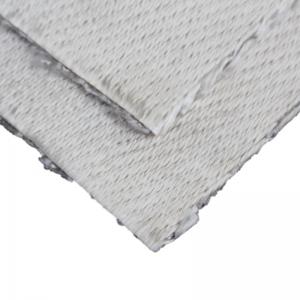
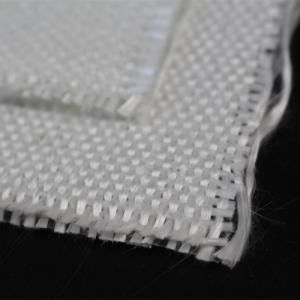
The liner contacts or faces the equipment surface. Fiberglass, silica and other high-temperature fabrics can be considered according to the measured metal temperature, abrasion and housing shape. Reinforcement may be added around lid edges, bolt cutouts, nozzles and other high-wear areas.
Flexible fiberglass, silica and other insulation cores are available. Core type and thickness depend on the thermal objective, external temperature, clearance and acceptable panel weight. Large strainer housings may benefit from several manageable panels instead of one heavy blanket.
Outer options can include silicone-coated fiberglass, PTFE-coated fabric, aluminized fabric and uncoated high-temperature textile. The outer layer is selected for handling, moisture, oil, weather, chemical splash, cleaning practice and surrounding radiant heat.
D-ring straps, buckles, lacing hooks, wire, springs and hook-and-loop closures may be used where their temperature and environment permit. Fasteners are positioned for removal without dismantling adjacent pipe insulation or reaching across hot components.
On hot piping, the strainer body can form a sizeable exposed area between insulated pipe runs. A fitted jacket can reduce heat transfer from the housing and help limit heat released into the surrounding work area. Actual performance depends on temperature, coverage, thickness, panel seams, cutouts, compression and ambient airflow.
Surface-temperature targets should be stated during quotation. Insulation does not automatically make every point safe to touch; lid hardware, vents, drains and uncovered connections may remain hot. Site procedures, guarding and verification remain necessary.
A standard hot-service jacket is not automatically suitable for chilled fluids. Cold-service insulation must address vapor entry at seams, closures, nozzles and the joint with adjacent pipe insulation. Moisture trapped inside a removable cover can lead to condensation on the housing and reduce insulation performance.
Provide the fluid temperature, ambient temperature, relative humidity and existing vapor-barrier system. The complete transition around the body, lid and piping connections needs to be reviewed before a cold-service construction is approved.
Basket strainers may include a lid vent, body drain, differential-pressure connections, gauges or sampling points. These components can remain exposed, pass through reinforced openings or receive separate small covers. The selected arrangement should maintain operation, observation and maintenance access.
Drain valves and small tubing should not carry the weight of the insulation jacket. Provide dimensions for handles, stems and discharge lines, together with the space needed to operate them. Components that require ventilation or immediate access must remain uncovered.
Lid seals, body joints, drains and flange connections can leak. A removable cover should support the site's inspection practice rather than conceal the component indefinitely. Independent lid and flange sections can make targeted inspection easier.
If process fluid enters the jacket, remove the affected panels and evaluate the fabric, insulation core, stitching and fasteners. Do not place insulation back over an active leak. The strainer must be isolated, repaired and checked by qualified personnel first.
An equipment drawing is the preferred reference. For existing installations, provide photographs from all sides and measurements taken from fixed points. Include the location of nearby piping, walls, platforms and supports.
If multiple units share the same nominal size, confirm the model and field arrangement of each one. Changes to drains, gauges, lid hardware or changeover controls can require a different pattern.
During strainer service, remove panels in the documented order and keep them dry and clean. After the basket and lid are reinstalled, inspect the equipment for leakage before replacing the insulation. Check each blanket for cuts, contamination, wet core, compressed insulation and damaged closures.
A duplex strainer can have several similar-looking panels. Clear identification reduces installation errors after maintenance. Labels can show the equipment number, left or right chamber, body or lid position and panel sequence. Customer part numbers and drawing revisions can also be added for repeat orders.
Identification supports maintenance but does not replace the equipment isolation procedure. Operators must verify which chamber is in service before opening a lid.
This jacket is an external passive insulation product. It is not a pressure component, lid seal, leak-containment device, spill barrier, fire-protection system or machinery guard. It must not obstruct vents, drains, gauges, changeover mechanisms, required labels or safe basket removal.
Do not use insulation to hide an abnormal hot spot, leaking lid or damaged body. The equipment owner remains responsible for pressure safety, process compatibility, isolation procedures and approval of the installed configuration.
BSTFLEX supports one-off replacements, plant insulation programs, equipment packages and OEM orders. Jackets can be produced from approved fabrication drawings, field measurement sheets, templates or physical samples.
For repeat orders, controlled drawings and panel identification help maintain consistency. Notify us of changes to strainers, drains, gauges, lid fasteners, changeover controls or surrounding piping before production.
A simplex jacket fits one basket chamber. A duplex set covers two chambers and must also allow the changeover mechanism to move. Duplex panels are normally identified by chamber and position so either side can be serviced independently.
Yes. A separate top panel is usually the most practical arrangement because technicians can reach bolts, clamps and the basket without removing all body insulation.
It should not when the removal path is included in the design. Provide the required lift height, lid movement and overhead clearance. The jacket thickness and panel edges will then be placed outside that working envelope.
Fixed body sections may be insulated where suitable, but handles, stems, gear operators and position indicators must remain free and accessible. Detailed drawings and operating clearances are required.
They can be incorporated, covered by separate flange pieces or left outside the basket-strainer cover. Select the arrangement according to flange-inspection policy and adjacent pipe insulation.
Not necessarily. Housing diameter, lid design, basket height, drain position and connection geometry can vary substantially. Each model should be checked before manufacturing.
A cold-service design may be possible, but vapor entry and condensation must be addressed. Provide operating temperature, ambient humidity and details of the existing pipe-insulation system.
Those housings may also use removable insulation, but their lid, clamp, nozzle and element-removal requirements need a separate pattern. They should be specified as filter-housing jackets rather than ordered solely from basket-strainer dimensions.
Send the old cover when available, together with current equipment photographs. Confirm any changes to drains, gauges, lid hardware or piping. A stretched or poorly fitting old jacket should not be copied without new measurements.
Send the strainer drawing, photographs, service conditions, basket-removal clearance and quantity to BSTFLEX. We will review the panel layout, lid access, materials and closure system before quotation.
Email: sales@pkfiresleeve.com
Previous:
Removable Y-Strainer Insulation JacketNext:
Removable Steam Moisture Separator Insulation JacketIf you have questions or suggestions, please leave us a message,we will reply you as soon as we can!

 français
 Deutsch
 русский
 italiano
 español
 português
 Nederlands
 العربية
 日本語
日本語 한국의
한국의 Türkçe
 Polski
 Tiếng Việt
 slovenský
 Indonesia