order(moq):
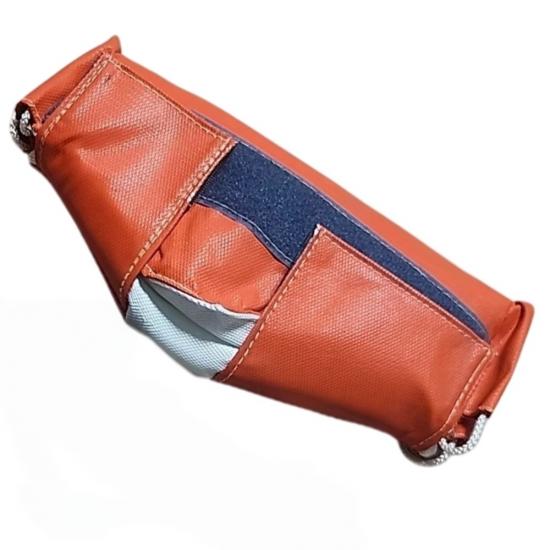
1A steam trap insulation jacket is a removable thermal cover shaped around an industrial steam trap and its approved insulation boundary. It helps close the insulation gap between the steam line and condensate piping while allowing maintenance personnel to reach the trap for testing, cleaning or replacement.
BSTFLEX manufactures each jacket according to the installed trap rather than relying only on the nominal pipe size. Trap type, body dimensions, connection arrangement, orientation, integral strainer, blowdown point and test access all affect the final pattern.
Steam traps require regular monitoring because dirt, wear, blockage and internal failure can affect the way condensate and air leave the steam system. Permanent insulation may have to be cut away whenever the trap is tested or opened. Once removed, it is not always restored correctly.
A reusable jacket can be opened without destroying the insulation assembly. After the trap has been inspected and returned to service, the same fitted cover can normally be reinstalled. Openings and removable flaps can be arranged around the points technicians need to reach.
Not every steam trap should be fully enclosed. Some thermostatic or temperature-responsive traps depend on heat loss from the body as part of their operating cycle. Covering the wrong area can change response time or interfere with normal operation.
Before ordering a jacket, confirm the permitted insulation boundary with the steam-trap manufacturer, plant engineer or system specification. Provide the trap make, model and operating principle whenever possible. BSTFLEX manufactures the cover to the approved boundary but does not determine whether an unknown trap design may be insulated.
Custom jackets can be considered for different trap constructions after the insulation requirements are confirmed:
The cover pattern must match the actual installed orientation. A horizontal trap, vertical trap and universal-connector assembly can require different closures and access points even when the connection size is the same.
Depending on the approved project design, the jacket may cover only the trap body or extend over selected connections. Separate covers are often preferable for adjacent isolation valves, flanges and strainers because each component can then be serviced independently.
| Component | Typical Options | Selection Considerations |
|---|---|---|
| Outer cover | Silicone coated fiberglass, PTFE coated fiberglass, aluminized fiberglass or other coated heat-resistant fabrics | Indoor or outdoor location, oil, moisture, abrasion and cleaning conditions |
| Insulation core | Fiberglass needle mat, silica needle mat, ceramic fiber insulation or aerogel-based insulation | Operating temperature, available space, required thickness and handling |
| Hot-face liner | Fiberglass cloth, silica fabric, stainless steel foil or stainless steel mesh | Contact temperature, vibration, trap shape and local wear |
| Fasteners | D-rings and straps, stainless steel hooks, springs, lacing wire, buckles or other removable closures | Temperature, maintenance frequency, orientation and installation clearance |
| Reinforcement | Quilting pins, reinforced seams, stainless steel mesh, edge protection and local wear patches | Jacket shape, repeated handling and support of the insulation core |
The temperature limit of one fabric is not the rating of the finished jacket. The complete assembly includes the insulation core, inner liner, thread, fasteners and installation details. Material selection must be based on the operating temperature and external exposure conditions.
A trap model drawing is the preferred starting point. If a drawing is unavailable, provide clear photographs and the following measurements:
Photographs should show the trap from both sides, above and below where possible. Mark the approved insulation boundary and the required opening direction directly on the photographs.
Steam traps may be checked using temperature, ultrasonic or other plant-approved methods. The jacket can be removed completely for testing, or it can include an access flap when the test location is known. The access arrangement should be agreed before production so the flap does not expose an unnecessary area during normal service.
Strainer caps, blowdown valves and drain paths must remain usable. A cover should not direct leakage or discharged condensate into the insulation core. Where the trap station has several components, numbered individual covers normally provide better access than one oversized blanket.
A complete trap station may include an upstream isolation valve, strainer, steam trap, check valve, downstream isolation valve and connecting pipework. These components do not have to be enclosed by one cover. A modular arrangement allows each item to be opened and replaced without removing the insulation from the complete station.
BSTFLEX can manufacture separate labelled jackets for the trap, adjacent valves, flanges and pipe sections. End overlaps help the individual covers meet without permanently joining them.
Remove the jacket according to the plant maintenance procedure and place it on a clean, dry surface. Inspect the outer cover, liner, seams, fasteners and insulation core before reinstallation. Wet or chemically contaminated insulation should be investigated rather than enclosed again.
Do not use the jacket to conceal active leakage. Any leaking connection, damaged trap or failed component must be repaired and made safe before the insulation cover is returned to service.
Outdoor trap stations require careful control of water entry. Weather-resistant fabrics can be combined with protected seams, suitable overlaps and drainage-aware installation. The closure should remain reachable and should not face a location where rainwater or condensate can collect.
Insulation reduces heat transfer but does not guarantee freeze protection during shutdown or loss of steam supply. Cold-weather projects may require heat tracing, drainage or other engineered measures in addition to the removable jacket.
BSTFLEX supports prototypes, plant replacement projects and repeat OEM production. Jackets can be manufactured from technical drawings, field dimensions, photographs, templates or approved samples. Permanent labels can include the trap number, line number, jacket section and installation direction.
For replacement work, identify any problem with the previous jacket, such as blocked testing access, interference with a blowdown valve, difficult closures or incorrect orientation. This information allows the new pattern to correct the issue instead of simply copying it.
No. Some trap designs may depend on heat loss or may have areas that must remain exposed. Confirm the permitted insulation boundary with the trap manufacturer, plant engineer or system specification before ordering.
Yes, if the pattern provides suitable access to the strainer cap, screen and blowdown point. A separate flap or divided jacket may make maintenance easier.
Only when the external dimensions, connection positions, operating orientation and required access points are sufficiently similar. Each model should be checked before it is assigned to the same pattern.
Separate valve jackets are normally more practical. They allow a valve or trap to be serviced without removing the complete station insulation.
An access flap can be added when the approved testing point is known. Some inspection methods may still require complete removal, depending on the plant procedure and trap design.
Yes. The outer fabric, seams, overlaps, closures and installation direction must be selected for weather exposure. Outdoor insulation should also be inspected periodically for water entry.
Send the steam-trap model, connection size, installed orientation, operating temperature, quantity, photographs and available drawings to BSTFLEX. We will review the approved insulation boundary, materials, closure arrangement and maintenance access before confirming the manufacturing specification.
Email: sales@pkfiresleeve.com
Previous:
Removable Elbow & Pipe Fitting Insulation CoverNext:
Removable Heat Exchanger Insulation JacketIf you have questions or suggestions, please leave us a message,we will reply you as soon as we can!

 français
 Deutsch
 русский
 italiano
 español
 português
 Nederlands
 العربية
 日本語
日本語 한국의
한국의 Türkçe
 Polski
 Tiếng Việt
 slovenský
 Indonesia