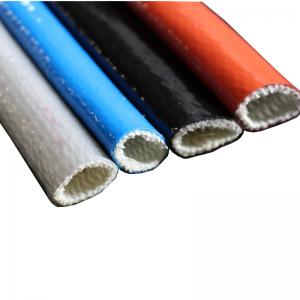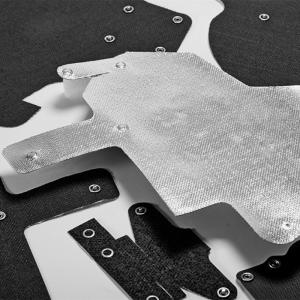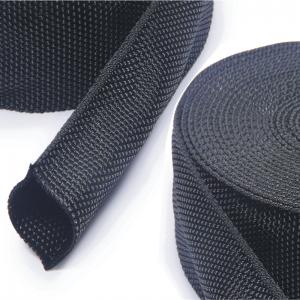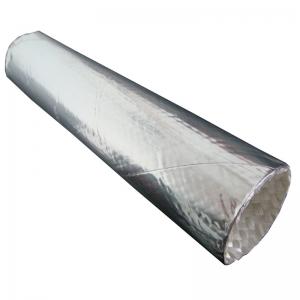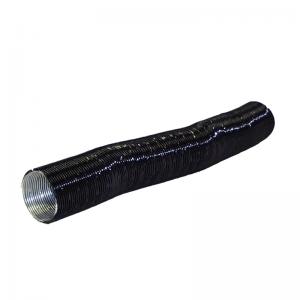
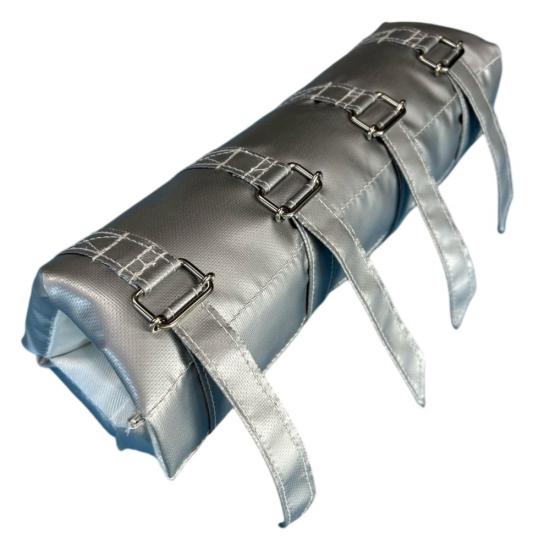
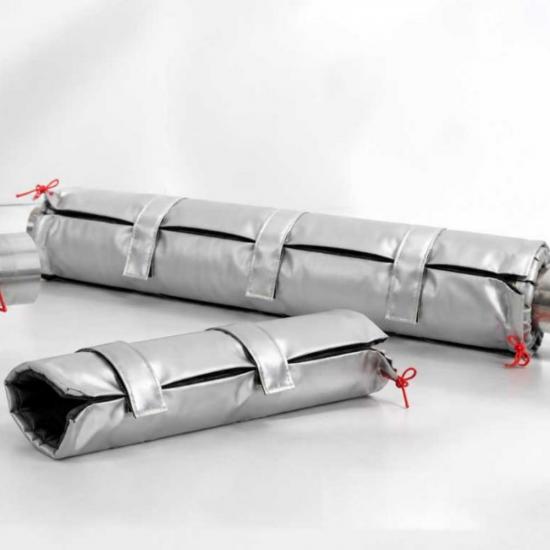
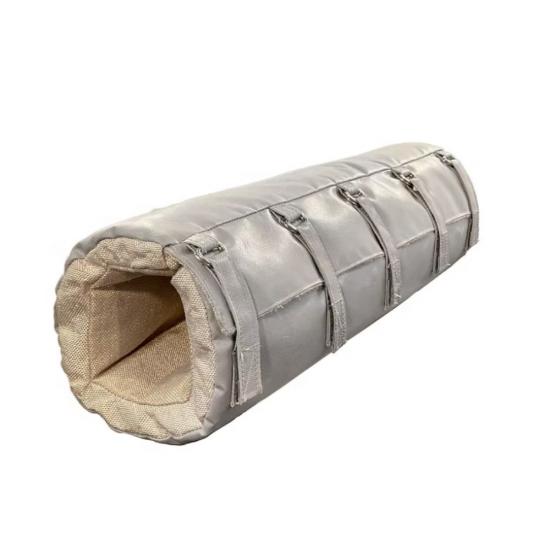
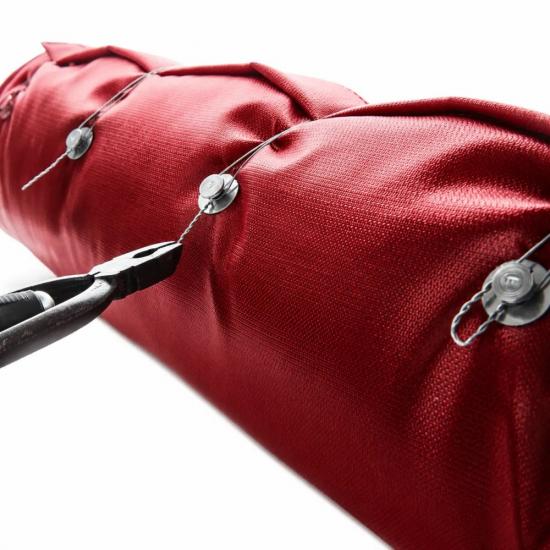
BSTFLEX removable pipe insulation jackets are custom-fabricated for straight industrial pipe sections that require thermal coverage and regular access. Modular reusable sections can be made around pipe diameter, insulated length, operating temperature, heat tracing and installation clearance, with materials and closures selected for the actual service environment.
order(moq):
1A removable pipe insulation jacket is a flexible, reusable thermal cover manufactured for an industrial pipe section that must remain accessible. It provides an alternative to rebuilding conventional insulation after inspection, welding, heat-tracing work or scheduled maintenance.
BSTFLEX manufactures each jacket according to the pipe diameter, required insulated length, operating temperature, surrounding environment and available installation space. Long pipe runs can be divided into numbered modular sections so that maintenance personnel remove only the section needed for the job.
This product page covers removable insulation for straight piping. Flanges, pumps, valves, elbows, tees and reducers have different shapes and service requirements and are better insulated with dedicated fitted covers. Keeping these products separate provides a more accurate pattern and makes replacement ordering easier.
Typical locations include exposed pipe sections between permanent insulation, inspection points, weld areas, heat-tracing connections, instrument access zones and short pipe spools that are regularly removed. The jacket can overlap adjacent insulation to reduce open gaps while maintaining a clear removal line.
A one-piece wraparound section with a longitudinal closure. This construction is suitable for a defined pipe length where the jacket can be opened and lifted away without interference from nearby equipment.
Longer runs can be divided into manageable sections. Each section can carry a permanent identification label showing the line number, position and installation sequence. Overlapping ends help reduce gaps between adjoining jackets.
A short removable jacket can be installed over a weld, inspection point or test location that requires periodic access. The surrounding permanent insulation remains undisturbed while the access jacket is removed.
The jacket can be patterned around approved heat-tracing cables, steam-tracing lines and connection boxes. Heat tracing is a separate engineered system. The location, temperature class and maintenance access requirements must be provided before the jacket construction is confirmed.
Outdoor designs can use weather-resistant outer fabrics, protected seams and installation details that discourage water entry. Orientation matters: closures, overlaps and seams should be positioned so that water cannot collect inside the insulation.
| Component | Typical Material Options | Selection Factors |
|---|---|---|
| Outer jacket | Silicone coated fiberglass, PTFE coated fiberglass, aluminized fiberglass or other coated high-temperature fabrics | Weather, oil, moisture, abrasion, radiant heat and cleaning conditions |
| Thermal core | Fiberglass needle mat, silica needle mat, ceramic fiber insulation or aerogel-based insulation | Pipe temperature, thermal target, permitted thickness and weight |
| Hot-face liner | Fiberglass cloth, silica fabric, stainless steel foil or stainless steel mesh | Contact temperature, vibration, surface condition and mechanical wear |
| Fastening system | D-rings and straps, hooks and lacing wire, springs, buckles or other reusable closures | Temperature, access space, vibration and removal frequency |
| Internal reinforcement | Quilting pins, stainless steel mesh, reinforced seams and local wear layers | Section length, orientation, insulation movement and handling method |
No single material temperature should be treated as the rating of the entire pipe jacket. The complete construction includes the outer fabric, insulation core, liner, sewing thread, fasteners and installation details. All components must be reviewed against the actual operating and exposure temperatures.
Straight pipe jackets are simpler than valve or pump covers, but the finished fit still depends on accurate dimensions. Please provide:
If the pipe already has insulation, clarify whether the new jacket will cover the bare pipe, replace the complete insulation assembly or act only as a removable outer cover. These are different constructions and require different finished diameters.
The longitudinal closure should remain visible and reachable after installation. On horizontal piping, it should not be positioned where leaking liquid or rainwater can collect. On vertical pipes, the section overlaps and support method must prevent the jacket and insulation core from sliding downward.
D-rings with straps provide adjustable tension for many indoor industrial applications. Stainless steel hooks, springs and lacing wire can be used where an all-metal closure is required. The correct choice depends on exposure temperature, vibration, access frequency and site practice.
| Insulation Method | Best Suited To | Maintenance Consideration |
|---|---|---|
| Removable pipe insulation jacket | Industrial pipe sections requiring repeated access | Complete sections can be removed and reinstalled |
| Insulation wrap or tape | Small pipework, temporary work or applications where wrapping is practical | May need to be unwrapped and replaced during service |
| Rigid or conventional pipe insulation | Long permanent pipe runs with limited access requirements | Sections may require cutting or rebuilding when opened |
| Metal jacketing | Protection of conventional insulation against weather and mechanical damage | Normally forms part of a separate rigid insulation system |
For hot pipes, the construction is normally selected to reduce heat transfer and accessible surface temperature while allowing maintenance access. For low-temperature piping, condensation control requires a continuous and correctly sealed vapor-retarder system. An ordinary stitched hot-service jacket should not automatically be specified for chilled or cryogenic service.
Insulation slows heat transfer but does not produce heat. Pipes exposed to freezing conditions may require a properly designed heat-tracing system in addition to insulation. The jacket must be compatible with the tracing design and must not cover connection boxes or inspection points that need to remain accessible.
After removal, place the jacket on a clean, dry surface rather than folding it sharply or dragging it across the floor. Before reinstallation, inspect the outer cover, liner, seams, fasteners and insulation core. Wet, compressed or chemically contaminated insulation may no longer provide the intended performance.
The pipe surface should be inspected for leakage and corrosion before the jacket is reinstalled. Where corrosion under insulation is a project concern, the inspection schedule and coating system must be determined by the asset owner or qualified engineer.
BSTFLEX supplies prototype jackets, replacement sections and repeat production for industrial projects and equipment manufacturers. Jackets can be produced from pipe schedules, drawings, site measurements, templates or approved samples. Options include equipment numbers, section labels, installation-direction markings, special packaging and project-specific material combinations.
For long piping runs, provide a section schedule showing the quantity, length and identification number of every jacket. This helps match each finished part to its installation location and simplifies future replacement orders.
They can be grouped by common pipe diameter and length, but the finished size must also account for insulation thickness, adjacent insulation, closures, overlaps and site clearance. Project-specific dimensions are recommended.
Yes. Modular sections can be installed in sequence with overlapping ends. Numbered labels help maintenance teams reinstall each section in the correct position.
It can be patterned to meet an adjoining fitted cover, but flanges and elbows are normally better served by their own removable sections. Separate covers provide a more accurate fit and allow one component to be opened without removing the complete pipe jacket.
Yes, provided the heat-tracing design, cable location, temperature classification and required access points are supplied. The insulation jacket does not replace tracing-system controls or electrical protection.
Not automatically. Hot-service insulation and cold-service vapor control have different construction requirements. Chilled and cryogenic applications require a specific review of condensation, vapor sealing, seams and penetrations.
Yes. The original pipe diameter and required installed length should still be confirmed because an old jacket may have stretched, compressed or been altered during service.
Send the pipe diameter, insulated length, operating temperature, insulation requirement, quantity and installation photographs to BSTFLEX. We will review the materials, section length, closure arrangement and overlaps for your piping system.
Email: sales@pkfiresleeve.com
If you have questions or suggestions, please leave us a message,we will reply you as soon as we can!

 français
 Deutsch
 русский
 italiano
 español
 português
 Nederlands
 العربية
 日本語
日本語 한국의
한국의 Türkçe
 Polski
 Tiếng Việt
 slovenský
 Indonesia