order(moq):
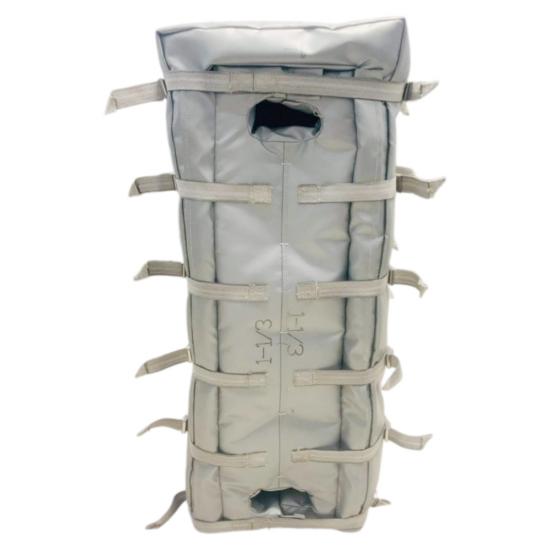
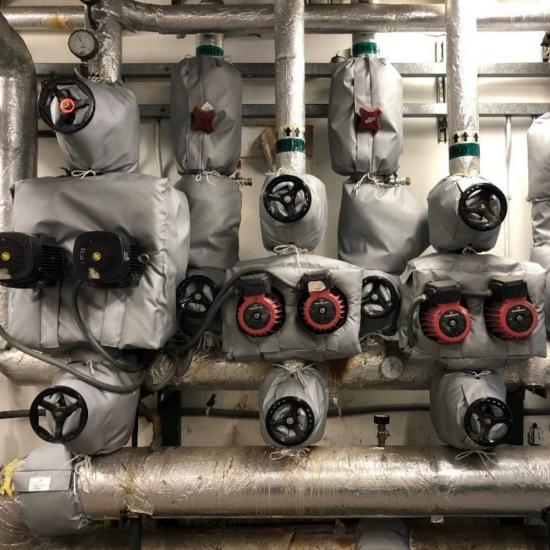
1A removable heat exchanger insulation jacket is a fitted thermal cover designed around the approved surfaces of industrial heat-transfer equipment. It can reduce exposed hot areas while allowing technicians to reach covers, heads, plates, nozzles and other service points during inspection or maintenance.
BSTFLEX manufactures each jacket from equipment drawings, field dimensions, photographs, templates or an approved sample. The construction is divided according to the way the heat exchanger is opened and serviced, so maintenance teams can remove only the necessary insulation sections.
Different heat exchanger designs require different insulation patterns. The equipment type, maintenance procedure and permitted insulation boundary must be confirmed before production.
Air-cooled heat exchangers and finned heat-transfer surfaces depend on airflow. Fans, fins, ventilation paths and other active heat-transfer surfaces must not be enclosed unless the equipment manufacturer has specifically approved the insulation arrangement.
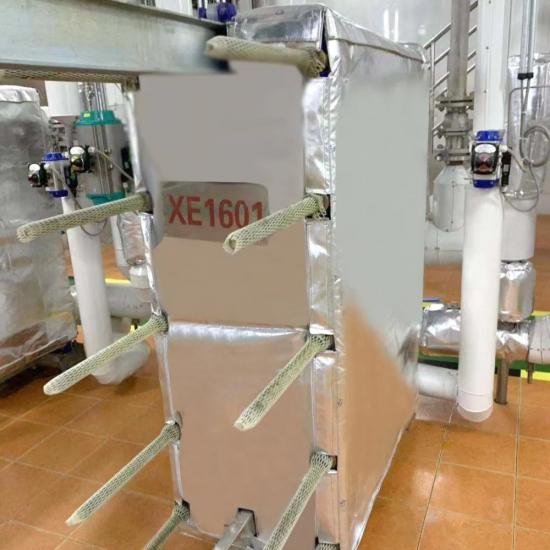
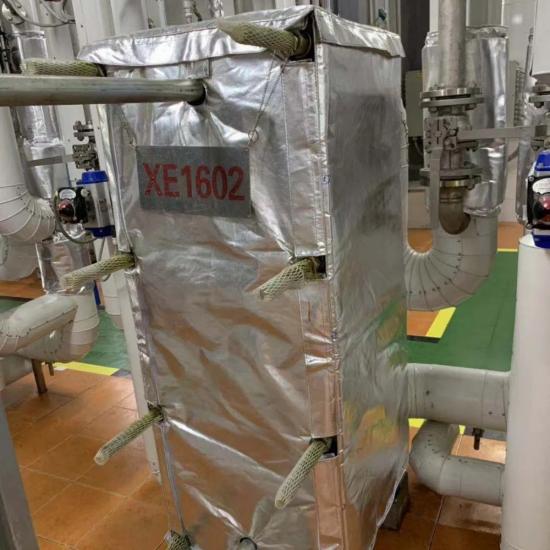
A plate-and-frame heat exchanger typically has a fixed frame plate, movable pressure plate, plate pack, tightening bolts, connection ports and support frame. The insulation jacket must fit around the body without preventing access to identification plates, drains, ports or tightening components that require inspection.
The cover can be manufactured as front, rear, side and top sections, with shaped openings around the pipe connections. A multi-piece layout makes it possible to remove selected panels when the plate pack needs inspection or cleaning. Section labels help technicians return every panel to the correct location.
A shell-and-tube exchanger may require separate insulation for the cylindrical shell, channel head, bonnet, removable cover, nozzles and saddles. These components should not automatically be enclosed by one oversized blanket.
Separating the shell section from the heads allows the end cover or tube bundle access area to be opened without removing insulation from the complete exchanger body. Nozzle covers and flange jackets may also be manufactured as individual parts when they require separate maintenance.
Large heat exchangers are easier to handle when the insulation is divided into practical sections. Panel size and weight should allow maintenance personnel to remove the jackets safely within the available workspace.
| Jacket Component | Typical Options | Design Considerations |
|---|---|---|
| Outer protective cover | Silicone coated fiberglass, PTFE coated fiberglass, aluminized fiberglass or other coated heat-resistant fabrics | Indoor or outdoor location, oil, moisture, abrasion, radiant heat and cleaning |
| Insulation core | Fiberglass needle mat, silica needle mat, ceramic fiber insulation or aerogel-based insulation | Operating temperature, thermal target, available space, section weight and thickness |
| Hot-face liner | Fiberglass fabric, silica fabric, stainless steel foil or stainless steel mesh | Contact temperature, surface condition, vibration and repeated handling |
| Closure system | D-rings and straps, stainless steel hooks, springs, lacing wire, buckles or other removable fasteners | Temperature, panel size, installation clearance and removal frequency |
| Reinforcement | Quilting pins, reinforced seams, stainless steel mesh, support tabs and local wear layers | Vertical position, large panels, curved heads and insulation movement |
The temperature rating of a single material is not the rating of the finished heat exchanger jacket. The complete assembly includes the liner, insulation core, outer cover, thread, fasteners and installation method. These components must be selected around the actual operating and exposure temperatures.
For hot-service equipment, the jacket is generally designed to reduce heat transfer from approved surfaces and preserve access for maintenance. The insulation thickness and materials depend on exchanger temperature, ambient conditions, required external surface temperature and available clearance.
Cold-service and chilled-water heat exchangers require control of condensation and water-vapor entry. A standard stitched hot-service blanket does not automatically provide a continuous vapor barrier. Sub-ambient and refrigeration applications require a separate review of seams, penetrations, closures, drainage and vapor-sealing requirements.
State whether pipework will remain connected while the jacket is installed. Photographs should show the exchanger from the front, rear and both sides, including all connection ports and nearby obstructions.
For large equipment, provide a dimensional drawing showing the coordinate position of every nozzle and support. A general overall length is not enough to create accurate openings in the jacket.
The insulation layout should follow the exchanger maintenance plan. Plate heat exchangers may require access to the plate pack, tightening bolts and frame. Shell-and-tube equipment may require removal of a channel cover, bonnet or tube bundle. Closures and panel joints should be located so these tasks can be completed without dismantling unrelated sections.
Nameplates, pressure markings, gauges, drains and vents may require permanent openings or access flaps. The customer should identify every point that must remain visible or operable while the insulation is installed.
Place removed panels on a clean, dry surface and retain the installation sequence. Inspect the outer cover, liner, seams, fasteners and insulation core before reinstallation. Wet, contaminated or heavily compressed insulation should be evaluated rather than returned directly to service.
The heat exchanger surface, connections and gasket areas should be checked for leakage according to the facility maintenance plan. A removable jacket provides access but should never be used to conceal an active leak.
Outdoor installations require attention to rain, wind, ultraviolet exposure, standing water and the orientation of seams. Suitable outer fabrics, protected overlaps and drainage-aware panel layouts can be specified. The top surface should be designed so water is not directed into panel joints or service openings.
Weather resistance depends on the entire jacket construction, not only the coated fabric. Needle holes, seams, fasteners, equipment penetrations and installation direction must all be reviewed.
BSTFLEX supports new equipment programs, plant retrofits and replacement jackets. Covers can be manufactured from drawings, field dimensions, digital measurements, templates or approved samples. Project options include part numbers, equipment tags, panel labels, installation drawings and special packaging.
When replacing an existing insulation jacket, identify any previous problems such as excessive panel weight, blocked nameplates, difficult closures, water entry, open gaps or interference with maintenance. The new pattern can then address the actual problem rather than reproduce it.
Only when the external dimensions, port positions, supports and required access points are sufficiently similar. Each model should be checked before it is assigned to an existing pattern.
Yes, if the jacket is divided into suitable panels with correctly positioned openings around the connected ports. The installed pipework and available clearance must be shown in the project information.
Separate shell, head, channel-cover, nozzle and flange sections are usually more practical. Modular covers provide better handling and allow maintenance access without removing the complete system.
Only with a construction specifically reviewed for condensation and vapor control. A standard stitched hot-service jacket should not be assumed to provide a continuous vapor barrier.
Normally no. Air-cooled fins and fans depend on airflow for heat transfer. Only surfaces specifically approved by the equipment manufacturer or project engineer should be insulated.
Yes. Equipment dimensions should still be confirmed because an old jacket may have stretched, compressed or been modified. Identify any fit or access problems that should be corrected in the replacement.
Send the exchanger type, equipment drawing, overall dimensions, port and nozzle locations, operating temperature, quantity and installation photographs to BSTFLEX. We will review the insulation boundary, panel layout, material construction, closures and maintenance access before confirming production.
Email: sales@pkfiresleeve.com
If you have questions or suggestions, please leave us a message,we will reply you as soon as we can!

 français
 Deutsch
 русский
 italiano
 español
 português
 Nederlands
 العربية
 日本語
日本語 한국의
한국의 Türkçe
 Polski
 Tiếng Việt
 slovenský
 Indonesia