order(moq):
1A Y-strainer removes debris from a pipeline through a screen housed inside its angled branch. That branch, the cleanout cap and the adjoining pipe connections create a shape that is difficult to insulate with straight pipe material. The screen also needs periodic cleaning, so any insulation applied to the body must be easy to remove without being cut apart.
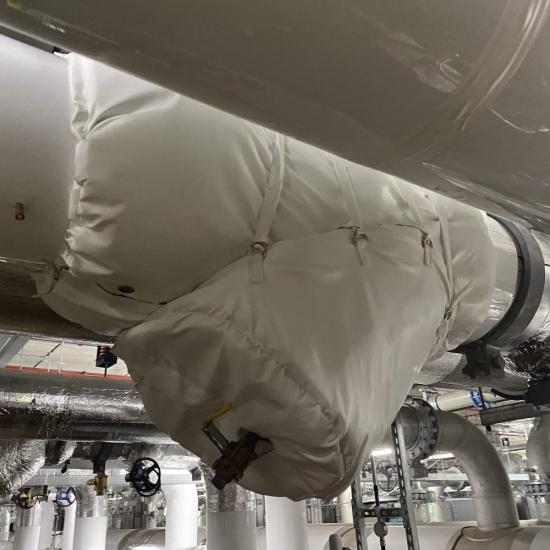
BSTFLEX manufactures removable Y-strainer insulation jackets to the actual fitting dimensions. The cover follows the main flow body and screen chamber while allowing planned access to the cap, drain or blowdown connection. Each jacket can be removed for strainer maintenance and reinstalled after the screen and sealing surfaces have been inspected.
| Item | Custom options | Information required |
|---|---|---|
| Connection | Flanged, threaded or welded arrangements | Connection type, pipe size and pressure class where applicable |
| Installation position | Horizontal or vertical line orientation | Flow direction and branch direction |
| Cleanout access | Separate end flap, removable cap panel or full-jacket removal | Cap diameter, removal direction and working clearance |
| Drain connection | Reinforced opening or separate fitted collar | Drain size, valve arrangement and required exposed length |
| Insulation system | Material, thickness, fastening and panel identification | Surface temperature, environment and thermal objective |
A Y-strainer is not simply a short valve body. Its screen chamber leaves the main pipeline at an angle and ends in a threaded cap, bolted cover or blowdown assembly. The branch may point downward, sideways or at another orientation dictated by the piping layout. Adjacent pipe insulation, flange bolts and support members can further reduce the space available for closures.
A dedicated pattern accounts for the entire geometry. It can include a fitted branch section, reinforced openings, overlap at the adjoining pipe insulation and accessible fasteners. Treating the component as a valve or wrapping it in a rectangular pad usually leaves gaps around the screen chamber and makes cleaning more difficult.
Removable strainer insulation covers can be used on heated or temperature-controlled piping in industrial facilities. Typical services include:
The process fluid, external surface temperature and likelihood of leakage must be identified before materials are selected. A jacket used on clean steam may require a different outer construction from one exposed to outdoor weather, oil or aggressive process chemicals.
The screen is a service item. Deposited debris increases pressure drop and eventually requires the cap or cover to be opened. The insulation design should follow the maintenance method used by the plant rather than covering the entire strainer with no plan for access.
For fittings cleaned frequently, the screen-chamber end can have a separate removable section. For less frequent service, the complete jacket may use quick-release closures and come off as one assembly. The correct choice depends on cap size, branch direction, weight, surrounding clearance and whether a drain valve remains attached.
Flanged strainers usually require greater allowance around the inlet and outlet connections. The cover can stop at the existing pipe insulation, overlap it, or incorporate the strainer flanges into the main jacket. Bolt access and flange inspection requirements should be agreed before production.
Threaded strainers are more compact but often have limited space between the body, nearby valves and pipe supports. Small dimensions do not make them standard products. Body shape, screen-cap size, drain arrangement and installation orientation still vary by manufacturer and model.
A one-piece cover can suit smaller strainers with open access around the body. It reduces the number of loose parts during maintenance and can be secured with integral straps, lacing or another reusable closure.
A split design can separate the main body from the screen-chamber end. It is useful when the cap is cleaned more frequently than the remainder of the fitting or when surrounding pipework prevents a single jacket from sliding clear.
Large flanged strainers may need separate body, branch, cap and flange panels. Numbered sections make the removal sequence clear and keep individual panel weight manageable.
A typical Y-strainer cover has three functional layers, plus reinforcement and closures. Materials are selected as a complete construction for the actual service rather than chosen from a single maximum-temperature figure.
The liner faces the metal body. Depending on surface temperature and abrasion, it may use fiberglass, silica or another suitable high-temperature fabric. Areas around bolts, cap edges and projecting drain fittings can be reinforced to reduce wear during repeated handling.
Flexible fiberglass, silica and other insulation cores are available. Thickness is selected from the thermal objective, space around the fitting and practical jacket weight. Excessive thickness can interfere with drain valves, flange bolts or adjacent components, so clearance must be checked before the construction is approved.
Silicone-coated fiberglass, PTFE-coated fabric, aluminized fabric and uncoated high-temperature textiles can be considered for the outer layer. Selection depends on indoor or outdoor location, moisture, oil, chemical splash, washdown, radiant heat and handling frequency.
Closure options include D-ring straps, buckles, lacing hooks, wire, springs and hook-and-loop fasteners where their temperature and environment permit. Fasteners should be positioned where technicians can reach them without removing neighboring pipe insulation.
On steam, hot-water and thermal-oil lines, an exposed Y-strainer can become a local heat-loss point between insulated pipe sections. A fitted cover can reduce exposed hot area while preserving access for screen cleaning. Performance depends on operating temperature, insulation thickness, seam design, cutouts, compression and ambient airflow.
A lower outside-surface temperature should not automatically be described as safe to touch. Openings, fasteners and adjacent bare components may remain hot. Site controls and temperature verification are still necessary wherever personnel can contact the piping system.
Cold or chilled service requires a different design approach. Moisture can enter through seams, closures and penetrations and then condense on the strainer body. A standard hot-service jacket should not be assumed to provide a continuous vapor barrier.
If condensation control is required, provide the fluid temperature, ambient temperature, relative humidity and existing pipe-insulation system. The transition between the removable jacket and adjacent insulation must be considered as part of the design.
Some Y-strainers use a plug at the branch end, while others have a pipe nipple, ball valve or permanent blowdown line. The blanket must not place weight on this connection or prevent valve operation. The drain can remain exposed, pass through a reinforced opening or receive its own small removable collar.
Any discharge connection that must be observed or operated quickly should remain visible. Provide the required tool clearance and the direction in which the cap, screen or drain component is removed.
Insulation can conceal early signs of leakage. Plants that inspect threaded joints, cap seals or flange connections should specify which areas must remain visible or be opened independently. The cover layout can include inspection flaps or separate flange pieces, but it must follow the site's inspection practice.
A jacket contaminated by process fluid should be removed and evaluated. Do not reinstall a cover over a leaking strainer. The fitting must first be isolated, repaired and returned to an acceptable condition by qualified personnel.
A manufacturer drawing or dimensional data sheet is preferred. When these are not available, send clear photographs and field measurements taken from fixed reference points.
Photographs should show the full fitting from several directions. Include the flow direction and indicate which way the angled branch points after installation. For repeat quantities, confirm that all strainers use the same manufacturer, model and orientation.
After screen maintenance, inspect the strainer for leaks before reinstalling the insulation. Check the jacket for cuts, wet insulation, chemical contamination, loose stitching and damaged fasteners. Store removed panels clean and dry rather than placing them directly on a boiler-room floor.
The jacket is an external passive insulation product. It is not a pressure-retaining component, fluid-containment device, gasket, leak-repair product, fire barrier or substitute for process guarding. It must not obstruct the cleanout procedure, blowdown operation, pressure-relief function or inspection required by the equipment and site.
Do not use the cover to hide an abnormal hot spot or a leaking cap. The system owner is responsible for pressure safety, fluid compatibility, maintenance procedures and approval of the final installed arrangement.
BSTFLEX can manufacture single replacement covers, plant-wide strainer jacket sets and repeat orders for equipment builders or insulation contractors. Projects can be produced from approved drawings, field measurement sheets or physical samples.
Options include numbered panels, customer part numbers, service-location labels, drawing revision references and individual packaging. If several nominally identical strainers are installed, field changes and different branch orientations should be identified before production.
Yes. A Y-strainer has an angled screen chamber and removable cleanout end. Its cover must fit that branch and support the screen-cleaning procedure. A generic valve pattern may not provide the necessary cap and drain access.
Yes. The strainer cover can be divided so that only the branch or cap section is removed. The available working space and the direction of screen removal must be shown on the drawing.
Yes. Each style is manufactured from its actual dimensions. Flanged units require bolt and inspection allowances, while compact threaded units require careful placement of closures around nearby components.
They can be included in the main jacket, covered separately or left outside the strainer cover. The choice depends on flange-inspection policy, adjacent pipe insulation and maintenance access.
Yes. A reinforced opening can keep the valve handle and discharge connection exposed. Provide the valve dimensions and the clearance needed for operation.
A cold-service design may be possible, but condensation and vapor control must be considered. Provide operating temperature, humidity and details of the adjoining pipe-insulation system.
Not reliably. Face-to-face length, branch angle, body profile, cap size and flange dimensions can differ even when the nominal pipe size is the same. Confirm each model before ordering.
Yes, but basket strainers have a different body and lid arrangement and require a separate pattern. Send the basket-strainer drawing rather than ordering it from a Y-strainer size alone.
Confirm that the screen, cap seal, drain and flanges are correctly assembled and free from leakage. Inspect the jacket for moisture, contamination and damage, then verify that no required operating component is obstructed.
Send the strainer drawing, dimensions, photographs, service temperature and quantity to BSTFLEX. We will review the body shape, screen-access method, drain arrangement and adjoining pipe insulation before quotation.
Email: sales@pkfiresleeve.com
If you have questions or suggestions, please leave us a message,we will reply you as soon as we can!

 français
 Deutsch
 русский
 italiano
 español
 português
 Nederlands
 العربية
 日本語
日本語 한국의
한국의 Türkçe
 Polski
 Tiếng Việt
 slovenský
 Indonesia