A fire sleeve sample can fit a hose correctly while the production order still arrives with the wrong cut length, an unsuitable marking layout or documents that do not identify the supplied construction. For an OEM buyer, approving the material is only part of the purchasing task.
A complete OEM fire sleeve specification should connect five items: the sleeve construction, finished dimensions, identification, packing unit and required documentation. Put those requirements against one part number and drawing revision before comparing quotations.
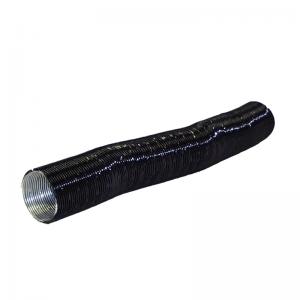
The BSTFLEX fire sleeve range provides a starting point for hose assemblers, equipment manufacturers and industrial distributors. This guide focuses on turning the selected product into a repeatable purchase specification.
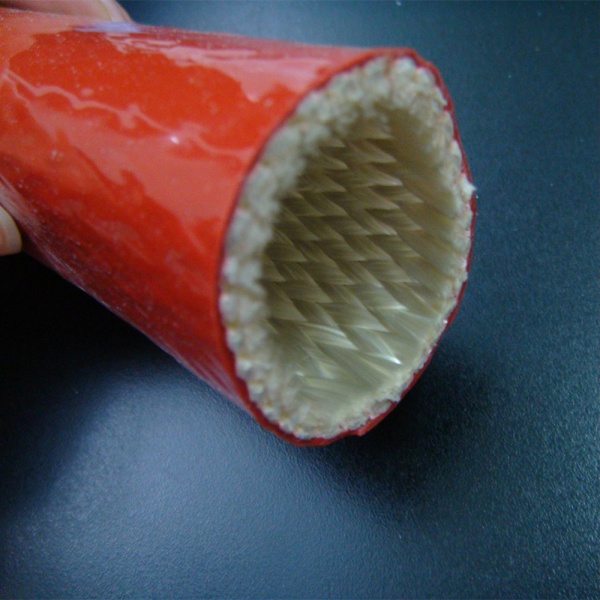
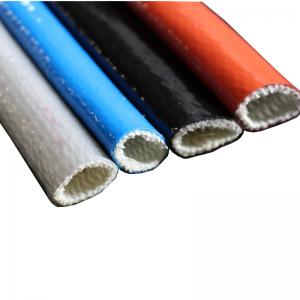
Give the supplier a product reference or describe the required substrate, coating and installation format. A red silicone-coated sleeve is not a complete description of the construction.
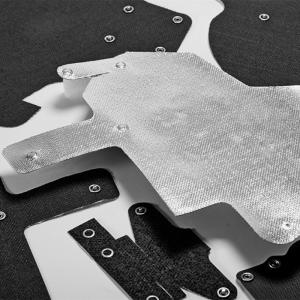
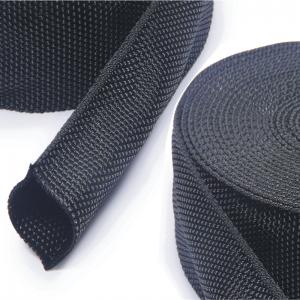
For tubular products, identify whether the project calls for a braided silicone fiberglass fire sleeve or a knitted fire sleeve. For an openable cover, distinguish a snap wrap firesleeve from a hook-and-loop fire sleeve. Include the closure and overlap in the specification rather than ordering only the body material.
Record the required inside diameter or closed fit, wall construction and protected length. Provide the hose or cable outside dimensions and the installation sequence so the supplier can review the proposed fit. The existing fire sleeve size chart and fitting-clearance guide covers those dimensional checks.
Keep the customer part number separate from the supplier's catalog reference. A customer part may include a particular cut length, marking and packaging arrangement that the base catalog number does not describe.
The right supply format depends on where cutting and inspection will take place. Bulk rolls let the hose assembler cut different lengths as production changes. Cut-to-length fire sleeve moves that operation into the supplier's agreed scope and gives the receiving team individual parts to count and inspect.
BSTFLEX lists special length, packing and custom-logo options for its EFRS braided fire sleeve. Specify the required delivery format when requesting a quotation so the proposed product and finishing work can be reviewed together.
State the required length per roll or spool, the acceptable length tolerance and whether each unit must contain one continuous piece. A total order of several hundred meters does not, by itself, define the number of rolls or the usable length of each roll.
Clarify whether shorter lengths are acceptable, how they should be identified and whether they can be supplied in the same shipment. Agree the policy before ordering rather than discovering it when preparing a cutting schedule.
Specify nominal cut length, allowable variation and the controlling unit. Agree whether length is measured with the sleeve relaxed or under a defined measuring load. This gives the supplier and receiving inspector the same basis for acceptance.
Also identify the finished condition: plain cut, specified edge treatment or a completed end detail. Where end finishing is included, state whether the ordered length is measured before or after that operation. Do not assume a quoted cut piece includes sealing tape or retention hardware.
For snap or hook-and-loop covers, show the end positions of the closure relative to the cut edge. Approve those details on the actual finished length, especially when ordering short sections.
A logo, an equipment part number and a line-identification message serve different purposes. For custom printed fire sleeve, provide the exact artwork or text and explain what must remain readable after installation.
State whether the identity belongs on the sleeve itself, the individual package or the outer carton. A private label fire sleeve order should not leave that distinction to interpretation.
Supply the approved artwork, required contrast and intended print area. Have the supplier confirm the proposed marking method and layout for the selected coating and diameter. Do not use an approved carton label as evidence that the same design has been approved for printing on the sleeve.
For production use, the important information may be a customer part number, drawing revision, circuit name or installation reference rather than a large logo. Identify which fields are fixed and which, such as a production lot reference, need to change between batches.
Show the required text orientation, distance from the finished end and any area that must remain unmarked. Consider where clamps, brackets, end wraps or an overlapping seam will sit so the identification remains accessible.
A repeated print along a roll does not establish where that print will appear after the roll is cut. For finished pieces that each require identification, specify the number of complete marks and their location relative to the cut ends.
Approve a representative cut and printed sample, not only an artwork proof. Include the shortest ordered length where it presents the most restricted print area.
State the expected rubbing, fluid contact, cleaning and thermal exposure, together with the required readability afterward. Agree a suitable acceptance check. The sleeve body's thermal rating is not automatically a durability rating for the printing.
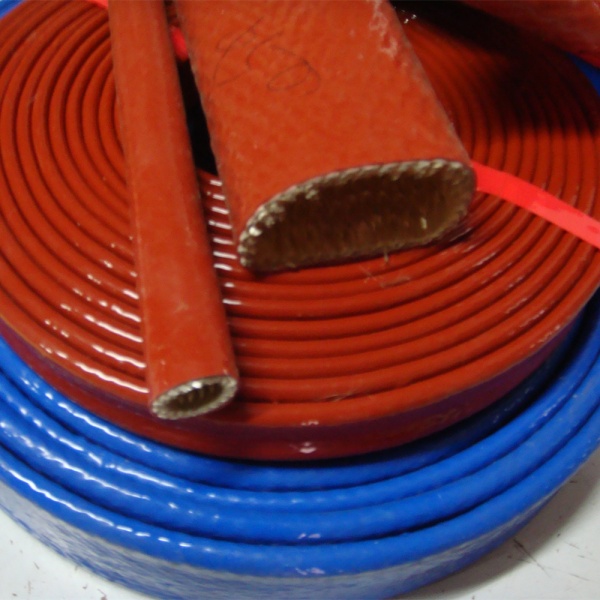
A fire sleeve packaging specification should explain how the customer will receive, store and issue the material. Discuss rolls for in-house cutting, counted bundles of one finished length or individually identified parts according to the production workflow.
For mixed-size orders, separate each part number and revision clearly. Identify the quantity and unit on every handling pack: meters, pieces and sets are different purchasing units. A carton count alone does not describe the contents.
As a label requirement, consider the customer part number, supplier reference, revision, size or cut length, quantity, lot reference and purchase-order number. Specify barcode content and label format when the warehouse uses scanning. The actual coding and traceability arrangement should be agreed during quotation.
Ask for a packing sample when appearance, cleanliness, identification or receiving efficiency matters. Check how the sleeve will be supported and restrained in transit, and establish acceptable condition on arrival. Special packing should be an identified quotation item rather than an unwritten expectation.
"Send certificates" is too broad for an OEM approval request. Identify which documents are needed to select the product, which are needed to approve production and which must accompany each shipment.
| Document | What to request | What to check |
|---|---|---|
| Technical datasheet | The current data for the proposed sleeve construction and product reference. | Dimensions, materials, stated service conditions and any limitations relevant to the assembly. |
| Product test report | The report relevant to the required exposure or test method. | Sample identification, construction, test method and edition, conditions, results and acceptance criteria. |
| Quality-management certificate | A current certificate for the supplying organization and applicable site or scope. | The organization, covered activity, issuing body and validity; keep it separate from product test evidence. |
| Material compliance statement | The declaration required by the customer's specification or destination market. | The product or material covered, the applicable requirement and the issue date. |
| Inspection report | The agreed dimensional, visual or other inspection record for the shipment or lot. | Part number, revision, lot identification, measured results where required and acceptance status. |
| Certificate of conformity | A supplier statement against the agreed purchase specification, when required. | Order and part references, applicable revision and the scope of the statement. |
Match test evidence to the proposed construction. A report for a tubular sleeve should not automatically be treated as qualification of a different closure, wall construction or completed hose assembly. Ask the supplier to identify the coverage and any remaining project-specific verification.
A material or type-test report is also different from a routine inspection record for the delivered lot. Agree whether the order requires existing qualification evidence, additional testing or shipment inspection, and include the related timing and cost in the quotation.
BSTFLEX's OEM and custom manufacturing services include sample development and project-based testing support. List the required documents early so their availability and scope can be confirmed before production approval.
Use a sample that represents the proposed delivery: the selected sleeve construction, actual cut length, requested marking, closure or end finish and packing label. A short unmarked material sample cannot confirm the entire order specification.
Evaluate installation on the intended assembly and check the required coverage. Then inspect the marking position, readability, quantity per pack and consistency between the physical part, label and supporting documents.
Keep the accepted drawing revision and sample identification in the approval record. Record any open points and who must resolve them. Where the customer requires a formal production approval package, agree its contents, sample quantity and submission timing during quotation.
A fit check establishes only the result of that check. Complete any required thermal, fluid-exposure or other validation separately before approving the sleeve for its intended service.
When comparing fire sleeve suppliers, separate base material from cutting, marking, packaging and documentation. Confirm whether tooling, artwork preparation, additional testing or special inspection is included or quoted separately.
For example, 1,000 pieces at 500 mm each contain 500 meters of finished sleeve. This is a quantity calculation, not a production quotation. A price for 500 meters on rolls is not directly comparable with a price for 1,000 cut, identified and packed pieces unless the finishing scope is the same.
Ask for the minimum order by size, color, marking layout and finished part number where applicable. Do not assume that the minimum for a standard unmarked roll applies to every customized version. BSTFLEX's OEM service information states that MOQ and lead time depend on product type and customization level.
Separate the forecast annual demand from the quantity being ordered now. Give the expected release pattern and required arrival date, and distinguish sample preparation, approval, production and transport in the proposed schedule.
Send one request covering the engineering requirement and the delivery requirement. The following format can be used for a new part or a supplier comparison.
| RFQ field | Information to include |
|---|---|
| Application and environment | Protected component, heat source, exposure conditions, fluids and any specified tests. |
| Product definition | Supplier reference if known, substrate, coating, color, wall construction and closure type. |
| Dimensions and drawing | Hose or bundle dimensions, fitting constraints, sleeve fit, finished length, tolerances and drawing revision. |
| Supply format | Roll or spool length, continuity requirement, cut-piece quantities and any end finishing. |
| Marking | Artwork or exact text, position, repeat pattern, orientation and required durability. |
| Packaging and identification | Quantity per pack, part separation, label fields, lot-reference requirements and carton instructions. |
| Approval and documents | Sample quantity, acceptance checks, required test evidence and documents needed with each shipment. |
| Commercial requirement | Trial quantity, production release quantity, annual forecast, delivery destination and requested schedule. |
Once the part is approved, order against the same drawing and agreed document revision rather than a shortened description such as "same red sleeve as before." Reconcile the customer part number with the supplier's reference on the order confirmation.
Agree which proposed changes require notification and approval. Depending on the project, these may include substrate, coating, closure, marking method, dimensional limits or packaging. Review a proposed alternative against the complete requirement rather than accepting it solely because the nominal diameter is unchanged.
For bulk fire sleeve supply, retain enough agreed lot information to connect receiving records with the delivered material. A printed product number identifies the design; batch identification is a separate requirement to define with the supplier.
Send BSTFLEX your assembly drawing or reference sample, required construction, cut lengths, marking layout, packaging requirements and order forecast. Include the operating conditions and the documents your engineering or quality team needs for approval.
For special-length, custom-logo or packing requests, specify the finished result rather than only the customization name. This allows the proposed material, finishing work and acceptance requirements to be reviewed together.
Request product data, samples or an OEM fire sleeve quotation. Include both the trial requirement and the intended production format so the sample review can address the part you plan to order.

 français
 Deutsch
 русский
 italiano
 español
 português
 Nederlands
 العربية
 日本語
日本語 한국의
한국의 Türkçe
 Polski
 Tiếng Việt
 slovenský
 Indonesia